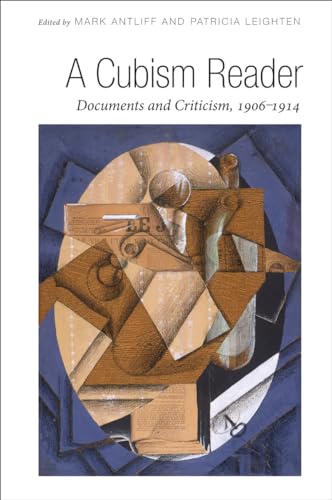
A Cubism Reader: Documents and Criticism, 1906-1914
Couldn't load pickup availability
About this book
A Cubism Reader: Documents and Criticism, 1906-1914 by Antliff, Mark. paperback edition. ISBN: 9780226021102.
With radical formal innovations that scandalized the European art world, cubism revolutionized modern art and opened the path toward pure abstraction. Documenting the first heady years of this profoundly influential movement, A Cubism Reader presents the most comprehensive collection of cubist primary sources ever compiled for English-language publication. This definitive anthology covers the historical genesis of cubism from 1906 to 1914, with documents that range from manifestos and poetry to exhibition prefaces and reviews to articles that address the cultural, political, and philosophical issues related to the movement. Most of the texts Mark Antliff and Patricia Leighten have selected are from French sources, but their inclusion of carefully culled German, English, Czech, Italian, and Spanish documents speaks to the international reach of cubist art and ideas. Equally wide-ranging are the writers represented—a group that includes Guillaume Apollinaire, Gertrude Stein, Jean Metzinger, Albert Gleizes, Fernand Léger, Francis Picabia, André Salmon, Raymond Duchamp-Villon, Henri Le Fauconnier, and many others. These diverse selections—unabridged and freshly translated—represent a departure from the traditional view of cubism as shaped almost exclusively by Picasso and Braque. Augmented by Antliff and Leighten’s insightful commentary on each entry, as well as many of the articles’ original illustrations, A Cubism Reader ultimately broadens the established history of the movement by examining its monumental contributions from a variety of contemporary perspectives.