HomeBusiness & Finance BooksA Hazardous Inquiry: The Rashomon Effect at Love Canal
Skip to product information
1 of 1

A Hazardous Inquiry: The Rashomon Effect at Love Canal

hardcoverMay 1, 1998
Regular price $60.74 USD
Regular price Sale price $60.74 USD
Sale Sold out
Shipping calculated at checkout.
Secure Checkout
Quality Guaranteed
New In Stock
ISBN-13: 9780674748330 ISBN-10: 0674748336
Publisher
Harvard University Press
Binding
hardcover
Published
May 1, 1998
Weight
1.3 lbs
Dimensions
24.30×2.50×16.30 cm

About this book

A Hazardous Inquiry: The Rashomon Effect at Love Canal by Mazur, Allan. hardcover edition. ISBN: 9780674748330.
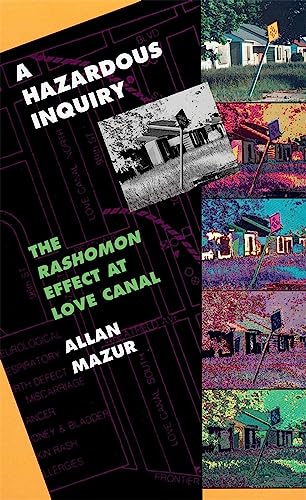
Love Canal. We hear these words and quickly recoil, remembering a community poisoned by toxic waste. Twenty years after the incident, Allan Mazur reexamines the circumstances that made this upstate New York neighborhood synonymous with ecological catastrophe and triggered federal "Superfund" legislation to clean up the nations thousands of hazardous waste sites. But is there only one true story of Love Canal? Borrowing the multi-viewpoint technique of the classic Japanese film Rashomon, Mazurs book reveals that there are many--often conflicting versions of what occurred at Love Canal. Hooker Chemical Company, which deposited the toxic wastes, explains why it subsequently donated the dump as the site for a new school. Lois Gibbs, whose son attended the school, tells of organizing the community to fight both the chemical threat and the uncaring state bureaucracy. Then there is the story of David Axelrod, New Yorks embattled commissioner of health, at odds with the homeowners over their assessment of the hazards and the proper extent of the states response. We also hear from Michael Brown, the young reporter who developed the story in the Niagara Gazette and eventually brought the problem of toxic waste to national attention. If A Hazardous Inquiry succeeded only in making us understand why one version of the events at Love Canal gained precedence over all others, it would be invaluable to policy makers, journalists, scientists, environmentalists, lawyers, and to citizens caught up in technical controversies that get played out (for better or worse) in the public arena. But the book moves beyond that to evaluate and reconcile the conflicting accounts of Love Canal, giving us a fuller, if more complex, picture than ever before. Through gripping personal tales, A Hazardous Inquiry tells how politics and journalism and epidemiology sometimes mesh, but often clash, when confronting a potential community disaster.