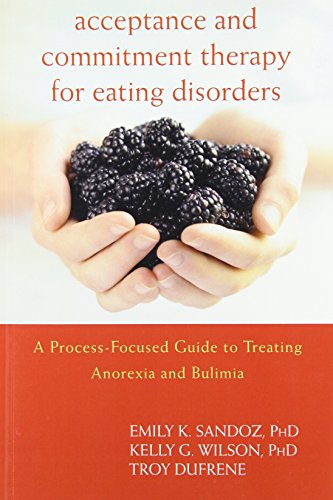
Acceptance and Commitment Therapy for Eating Disorders: A Process-Focused Guide to Treating Anorexia and Bulimia
Couldn't load pickup availability
About this book
Acceptance and Commitment Therapy for Eating Disorders: A Process-Focused Guide to Treating Anorexia and Bulimia by Sandoz PhD, Emily K.. paperback edition. ISBN: 9781626253964.
A Process-Focused Guide to Treating Eating Disorders with ACT At some point in clinical practice, most therapists will encounter a client suffering with an eating disorder, but many are uncertain of how to treat these issues. Because eating disorders are rooted in secrecy and reinforced by our cultures dangerous obsession with thinness, sufferers are likely to experience significant health complications before they receive the help they need. Acceptance and Commitment Therapy for Eating Disorders presents a thorough conceptual foundation along with a complete protocol therapists can use to target the rigidity and perfectionism at the core of most eating disorders. Using this protocol, therapists can help clients overcome anorexia, bulimia, binge eating disorder, and other types of disordered eating. This professional guide offers a review of acceptance and commitment therapy (ACT) as a theoretical orientation and presents case conceptualizations that illuminate the ACT process. Then, it provides session-by-session guidance for training and tracking present-moment focus, cognitive defusion, experiential acceptance, transcendent self-awareness, chosen values, and committed action-the six behavioral components that underlie ACT and allow clients to radically change their relationship to food and to their bodies. Both clinicians who already use ACT in their practices and those who have no prior familiarity with this revolutionary approach will find this resource essential to the effective assessment and treatment of all types of eating disorders.