
HomeHistory BooksAn Imperial Vision: Indian Architecture and Britain's Raj
Skip to product information
1 of 1

An Imperial Vision: Indian Architecture and Britain's Raj

hardcoverFebruary 16, 1989
Regular price $156.28 USD
Regular price Sale price $156.28 USD
Sale Sold out
Shipping calculated at checkout.
Free Shipping
Secure Checkout
Quality Guaranteed
New In Stock
ISBN-13: 9780520062351 ISBN-10: 0520062353
Publisher
University of California Press
Binding
hardcover
Published
February 16, 1989
Weight
2.0 lbs
Dimensions
26.70×2.50×19.10 cm

About this book

An Imperial Vision: Indian Architecture and Britain's Raj by Metcalf, Thomas R.. hardcover edition. ISBN: 9780520062351.
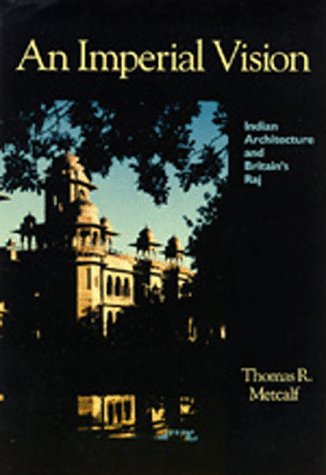
The magnificent buildings constructed by the British in India, many of which may still be seen by the traveller, did not spring simply from the fancy of the architects or from purely aesthetic or administrative concerns: Rather they embodied a vision the British had of themselves as rulers of India. An Imperial Vision examines the relationship between culture and power as expressed in the architectural forms the British employed in India. From the great monuments of New Delhi to the most obscure structures in dusty country towns these buildings visibly represented in stone the choices the British made in politics as imperial rulers. The author illustrates how, in the years after the uprising of 1857, the British constructed a vision of themselves not as mere foreign conquerors, but as legitimate, almost indigenous rulers, linked directly to the Mughals and hence to Indias own past. In so doing they created the distinctive forms of so-called Indo-Saracenic architecture. For a half a century this building sustained a new ideology of empire. Yet this self-confidence could not endure forever. By the 1920s, despite the massive building projects underway on the plains of Delhi, the knowledge, and the power, that upheld the Raj had alike begun to slip away. An Imperial Vision, by its focus upon the relationships of culture and power that underlay the colonial order, throws light on the distinctive nature of late nineteenth-century imperialism, and more generally, on the way political authority takes shape in monumental architecture.