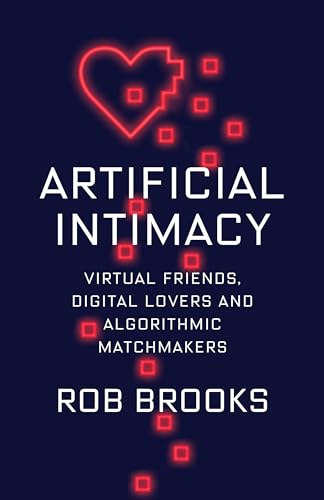
Artificial Intimacy: Virtual Friends, Digital Lovers, and Algorithmic Matchmakers
Couldn't load pickup availability
About this book
Artificial Intimacy: Virtual Friends, Digital Lovers, and Algorithmic Matchmakers by Brooks, Rob. hardcover edition. ISBN: 9780231200943.
What happens when the human brain, which evolved over eons, collides with twenty-first-century technology? Machines can now push psychological buttons, stimulating and sometimes exploiting the ways people make friends, gossip with neighbors, and grow intimate with lovers. Sex robots present the humanoid face of this technological revolution―yet although it is easy to gawk at their uncanniness, more familiar technologies based in artificial intelligence and virtual reality are insinuating themselves into human interactions. Digital lovers, virtual friends, and algorithmic matchmakers help us manage our feelings in a world of cognitive overload. Will these machines, fueled by masses of user data and powered by algorithms that learn all the time, transform the quality of human life? Artificial Intimacy offers an innovative perspective on the possibilities of the present and near future. The evolutionary biologist Rob Brooks explores the latest research on intimacy and desire to consider the interaction of new technologies and fundamental human behaviors. He details how existing artificial intelligences can already learn and exploit human social needs―and are getting better at what they do. Brooks combines an understanding of core human traits from evolutionary biology with analysis of how cultural, economic, and technological contexts shape the ways people express them. Beyond the technology, he asks what the implications of artificial intimacy will be for how we understand ourselves.