
HomeBusiness & Finance BooksBalance Sheet Recession: Japan's Struggle with Uncharted Economics and its Global Implications
Skip to product information
1 of 1

Balance Sheet Recession: Japan's Struggle with Uncharted Economics and its Global Implications

HardcoverOctober 24, 2003
Regular price $225.50 USD
Regular price Sale price $225.50 USD
Sale Sold out
Shipping calculated at checkout.
Secure Checkout
Quality Guaranteed
New In Stock
ISBN-13: 9780470821169 ISBN-10: 0470821167
Publisher
Wiley
Binding
Hardcover
Published
October 24, 2003
Weight
1.4 lbs
Dimensions
23.70×3.20×15.90 cm

About this book

Balance Sheet Recession: Japan's Struggle with Uncharted Economics and its Global Implications by Koo, Richard C.. Hardcover edition. ISBN: 9780470821169.
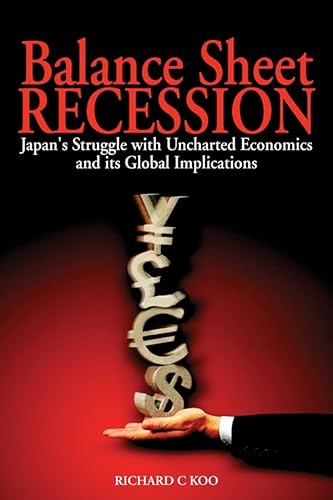
In this groundbreaking book, leading international economist, Richard Koo argues that far from being the sick man of Asia, Japan is suffering from a temporary but highly unusual economic aberration. Economists and business commentators have always assumed that the majority of companies in any economy are forward looking and are trying to maximize profits. They never considered the possibility that a vast majority of companies may be placing their highest priorities on minimizing debt in order to repair their balance sheets. But that remote possibility has been the reality in Japan for the past decade, and more recently in many other countries including at least a part of the US. Balance Sheet Recession argues that contrary to popular belief, it is this massive shift in corporate behavior, instead of structural problems, that is the root cause of both the deflation and the non-performing loan problems that have troubled Japan for so long. It argues that when the causality runs from the corporate balance sheet problems to deflation and banking problems, a highly unconventional policy response is needed to stabilize the economy. After all, the last time anything similar has happened was the 1930s in the US. Richard Koos experience in dealing with both the US banking crisis of the early 1980s and the Japanese balance sheet and banking problems of the last ten years makes him unique qualified to comment on this situation. He clearly explains how such a recession can happen in any economy following an asset price bubble, and how best to deal with it.