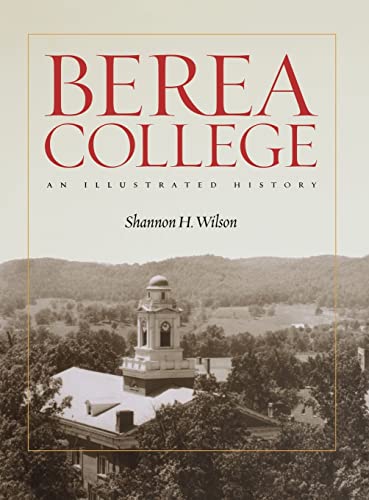
Berea College: An Illustrated History
Couldn't load pickup availability
About this book
Berea College: An Illustrated History by Wilson, Shannon H.. hardcover edition. ISBN: 9780813123790.
The motto of Berea College is "God has made of one blood all peoples of the earth," a phrase underlying Bereas 150-year commitment to egalitarian education. The first interracial and coeducational undergraduate institution in the South, Berea College is well known for its mission to provide students the opportunity to work in exchange for a tuition-free quality education. The founders believed that participation in manual labor blurred distinctions of class; combined with study and leisure, it helped develop independent, industrious, and innovative graduates committed to serving their communities. These values still hold today as Berea continues its legendary commitment to equality, diversity, and cultural preservation and, at the same time, expands its mission to include twenty-first-century concerns, such as ecological sustainability. In Berea College: An Illustrated History, Shannon H. Wilson unfolds the saga of one of Kentuckys most distinguished institutions of higher education, centering his narrative on the eight presidents who have served Berea. The colleges founder, John G. Fee, was a staunch abolitionist and believer in Christian egalitarianism who sought to build a college that "would be to Kentucky what Oberlin was to Ohio, antislavery, anti-caste, anti-rum, anti-sin." Indeed, the connection to Oberlin is evident in the colleges abolitionist roots and commitment to training African American teachers, preachers, and industrial leaders. Black and white students lived, worked, and studied together in interracial dorms and classrooms; the extent of Bereas reformist commitment is most evident in an 1872 policy allowing interracial dating and intermarriage among its student body. Although the ratio of black to white students was nearly equal in the colleges first twenty years, this early commitment to the education of African Americans was shattered in 1904, when the Day Law prohibited the races from attending school together. Berea fought the law until it lost in the U.S. Supreme Court in 1908 but later returned to its commitment to interracial education in 1950, when it became the first undergraduate college in Kentucky to admit African Americans. Bereas third president, William Goodell Frost, shifted attention toward "Appalachian America" during the interim, and this mission to reach out to Appalachians continues today. Wilson also chronicles the creation of Bereas many unique programs designed to serve men and women in Kentucky and beyond. A university extension program carried Bereas educational opportunities into mountain communities. Later, the New Opportunity School for Women was set up to help adult women return to the job market by offering them career workshops, job experience on campus, and educational and cultural enrichment opportunities. More recently, the college developed the Black Mountain Youth Leadership Program, designed to reduce the isolation of African Americans in Appalachia and encourage cultural literacy, academic achievement, and community service. Berea College explores the culture and history of one of Americas most unique institutions of higher learning. Complemented by more than 180 historic photographs, Wilsons narrative documents Bereas majestic and inspiring story.