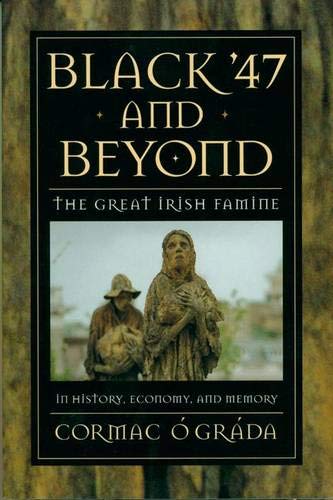

Black '47 and Beyond: The Great Irish Famine in History, Economy, and Memory (The Princeton Economic History of the Western World)
Couldn't load pickup availability
About this book
Black '47 and Beyond: The Great Irish Famine in History, Economy, and Memory (The Princeton Economic History of the Western World) by O Grada, Cormac. Hardcover edition. ISBN: 9780691015507.
Here Irelands premier economic historian and one of the leading authorities on the Great Irish Famine examines the most lethal natural disaster to strike Europe in the nineteenth century. Between the mid-eighteenth and early-nineteenth centuries, the food source that we still call the Irish potato had allowed the fastest population growth in the whole of Western Europe. As vividly described in Ó Grádas new work, the advent of the blight phytophthora infestans transformed the potato from an emblem of utility to a symbol of death by starvation. The Irish famine peaked in Black 47, but it brought misery and increased mortality to Ireland for several years. Central to Irish and British history, European demography, the world history of famines, and the story of American immigration, the Great Irish Famine is presented here from a variety of new perspectives. Moving away from the traditional narrative historical approach to the catastrophe, Ó Gráda concentrates instead on fresh insights available through interdisciplinary and comparative methods. He highlights several economic and sociological features of the famine previously neglected in the literature, such as the part played by traders and markets, by medical science, and by migration. Other topics include how the Irish climate, usually hospitable to the potato, exacerbated the failure of the crops in 1845-1847, and the controversial issue of Britains failure to provide adequate relief to the dying Irish. Ó Gráda also examines the impact on urban Dublin of what was mainly a rural disaster and offers a critical analysis of the famine as represented in folk memory and tradition. The broad scope of this book is matched by its remarkable range of sources, published and archival. The book will be the starting point for all future research into the Irish famine.