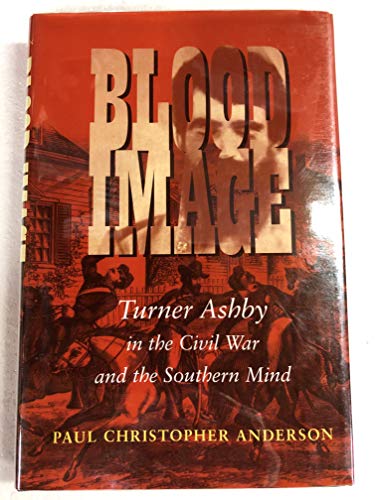
Blood Image: Turner Ashby in the Civil War and the Southern Mind (Conflicting Worlds: New Dimensions of the American Civil War)
Couldn't load pickup availability
About this book
Blood Image: Turner Ashby in the Civil War and the Southern Mind (Conflicting Worlds: New Dimensions of the American Civil War) by Anderson, Paul Christopher. hardcover edition. ISBN: 9780807127520.
With Blood Image, his compellingly original biography of Confederate cavalry leader Turner Ashby, Paul Anderson demonstrates that the symbol of a man can be just as important as the man himself. Renowned as a born leader, graceful horseman, and violent partisan warrior, Turner Ashby was one of the most famous fighting men of the Civil War. Rising to colonel of the 7th Virginia Cavalry, Ashby fought brilliantly under Thomas J. "Stonewall" Jackson during the 1862 Shenandoah Valley campaign until he died in battle near Harrisonburg, Virginia. These bare facts of Ashbys wartime exploits scarcely convey the majesty and shaping force of the legend that grew around him while he lived and fought. Anderson explores how and why Ashbys admirers in the Shenandoah Valley made him into their essential icon of "home." Anderson also demonstrates that Ashbys image-a catalytic, mesmerizing, and often contradictory combination of southern antebellum cultural ideals and wartime hopes and fears-emerged during his own lifetime and was not a later creation of the Lost Cause. Recognizing the power of Ashbys fame as knightly horseman, family defender, natural man and savage, and Confederate warrior, Anderson boldly organizes his study in four radical chapters that capture and reflect the circular energy of those images, each facet reinforcing and refreshing the others. With superb scholarship he shows that the force of Ashbys image was double-edged: it inspired admirers in the Shenandoah Valley, but it also shielded them from the savagery of a war that challenged the very ideals at the heart of their defense of home.