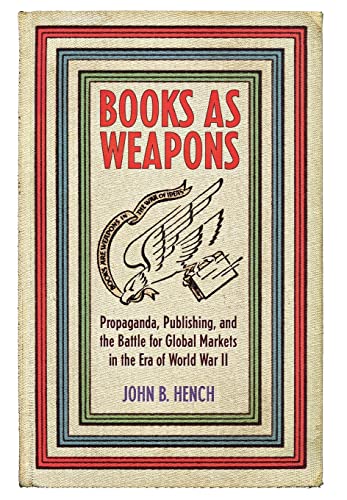
Books As Weapons: Propaganda, Publishing, and the Battle for Global Markets in the Era of World War II
Couldn't load pickup availability
About this book
Books As Weapons: Propaganda, Publishing, and the Battle for Global Markets in the Era of World War II by Hench, John B.. Hardcover edition. ISBN: 9780801448911.
Only weeks after the D-Day invasion of June 6, 1944, a surprising cargo―crates of books―joined the flood of troop reinforcements, weapons and ammunition, food, and medicine onto Normandy beaches. The books were destined for French bookshops, to be followed by millions more American books (in translation but also in English) ultimately distributed throughout Europe and the rest of the world. The British were doing similar work, which was uneasily coordinated with that of the Americans within the Psychological Warfare Division of General Eisenhowers Supreme Headquarters, Allied Expeditionary Force, under General Eisenhowers command. Books As Weapons tells the little-known story of the vital partnership between American book publishers and the U.S. government to put carefully selected recent books highlighting American history and values into the hands of civilians liberated from Axis forces. The government desired to use books to help "disintoxicate" the minds of these people from the Nazi and Japanese propaganda and censorship machines and to win their friendship. This objective dovetailed perfectly with U.S. publishers ambitions to find new profits in international markets, which had been dominated by Britain, France, and Germany before their book trades were devastated by the war. Key figures on both the trade and government sides of the program considered books "the most enduring propaganda of all" and thus effective "weapons in the war of ideas," both during the war and afterward, when the Soviet Union flexed its military might and demonstrated its propaganda savvy. Seldom have books been charged with greater responsibility or imbued with more significance. John B. Hench leavens this fully international account of the programs with fascinating vignettes set in the war rooms of Washington and London, publishers offices throughout the world, and the jeeps in which information officers drove over bomb-rutted roads to bring the books to people who were hungering for them. Books as Weapons provides context for continuing debates about the relationship between government and private enterprise and the image of the United States abroad. To see an interview with John Hench conducted by C-SPAN at the 2010 annual conference of the Organization of American Historians, visit: http://www.c-spanvideo.org/program/id/222522.