
HomeHistory BooksBravo for the Marshallese: Regaining Control in a Post-Nuclear, Post-Colonial World (Case Studies on Contemporary Social Issues)
Skip to product information
1 of 1

Bravo for the Marshallese: Regaining Control in a Post-Nuclear, Post-Colonial World (Case Studies on Contemporary Social Issues)

paperbackMarch 9, 2012
Regular price $39.91 USD
Regular price Sale price $39.91 USD
Sale Sold out
Shipping calculated at checkout.
Secure Checkout
Quality Guaranteed
New In Stock
ISBN-13: 9781111833848 ISBN-10: 1111833842
Publisher
Cengage Learning
Binding
paperback
Published
March 9, 2012
Weight
0.6 lbs
Dimensions
23.20×1.20×16.30 cm

About this book

Bravo for the Marshallese: Regaining Control in a Post-Nuclear, Post-Colonial World (Case Studies on Contemporary Social Issues) by Barker, Holly M.. paperback edition. ISBN: 9781111833848.
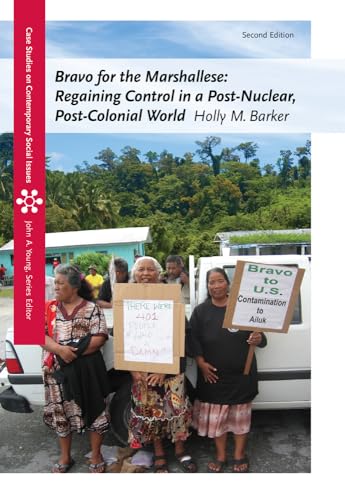
This case study describes the role an applied anthropologist takes to help Marshallese communities understand the impact of radiation exposure on the environment and themselves, and addresses problems stemming from the U.S. nuclear weapons testing program conducted in the Marshall Islands from 1946-1958. The author demonstrates how the U.S. Government limits its responsibilities for dealing with the problems it created in the Marshall Islands. Through archival, life history, and ethnographic research, the author constructs a compelling history of the testing program from a Marshallese perspective. For more than five decades, the Marshallese have experienced the effects of the weapons testing program on their health and their environment. This book amplifies the voice of the Marshallese who share their knowledge about illnesses, premature deaths, and exile from their homelands. The author uses linguistic analysis to show how the Marshallese developed a unique radiation language to discuss problems related to their radiation exposure problems that never existed before the testing program. Drawing on her own experiences working with the government of the Marshall Islands, the author emphasizes the role of an applied anthropologist in influencing policy, and empowering community leaders to seek meaningful remedies.