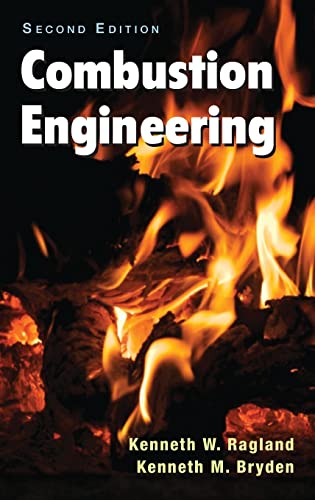
Combustion Engineering
Couldn't load pickup availability
About this book
Combustion Engineering by Ragland, Kenneth W.. hardcover edition. ISBN: 9781420092509.
Combustion Engineering, Second Edition maintains the same goal as the original: to present the fundamentals of combustion science with application to today’s energy challenges. Using combustion applications to reinforce the fundamentals of combustion science, this text provides a uniquely accessible introduction to combustion for undergraduate students, first-year graduate students, and professionals in the workplace. Combustion is a critical issue impacting energy utilization, sustainability, and climate change. The challenge is to design safe and efficient combustion systems for many types of fuels in a way that protects the environment and enables sustainable lifestyles. Emphasizing the use of combustion fundamentals in the engineering and design of combustion systems, this text provides detailed coverage of gaseous, liquid and solid fuel combustion, including focused coverage of biomass combustion, which will be invaluable to new entrants to the field. Eight chapters address the fundamentals of combustion, including fuels, thermodynamics, chemical kinetics, flames, detonations, sprays, and solid fuel combustion mechanisms. Eight additional chapters apply these fundamentals to furnaces, spark ignition and diesel engines, gas turbines, and suspension burning, fixed bed combustion, and fluidized bed combustion of solid fuels. Presenting a renewed emphasis on fundamentals and updated applications to illustrate the latest trends relevant to combustion engineering, the authors provide a number of pedagogic features, including: Numerous tables with practical data and formulae that link combustion fundamentals to engineering practice Concise presentation of mathematical methods with qualitative descriptions of their use Coverage of alternative and renewable fuel topics throughout the text Extensive example problems, chapter-end problems, and references These features and the overall fundamentals-to-practice nature of this book make it an ideal resource for undergraduate, first level graduate, or professional training classes. Students and practitioners will find that it is an excellent introduction to meeting the crucial challenge of engineering sustainable combustion systems in a cost-effective manner. A solutions manual and additional teaching resources are available with qualifying course adoption.