
Crossing Parish Boundaries: Race, Sports, and Catholic Youth in Chicago, 1914-1954 (Historical Studies of Urban America)
Couldn't load pickup availability
About this book
Crossing Parish Boundaries: Race, Sports, and Catholic Youth in Chicago, 1914-1954 (Historical Studies of Urban America) by Neary, Timothy B.. Hardcover edition. ISBN: 9780226388762.
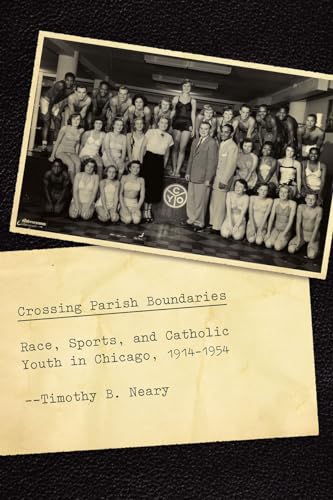
Controversy erupted in spring 2001 when Chicago’s mostly white Southside Catholic Conference youth sports league rejected the application of the predominantly black St. Sabina grade school. Fifty years after Brown v. Board of Education, interracialism seemed stubbornly unattainable, and the national spotlight once again turned to the history of racial conflict in Catholic parishes. It’s widely understood that midcentury, working class, white ethnic Catholics were among the most virulent racists, but, as Crossing Parish Boundaries shows, that’s not the whole story. In this book, Timothy B. Neary reveals the history of Bishop Bernard Sheil’s Catholic Youth Organization (CYO), which brought together thousands of young people of all races and religions from Chicago’s racially segregated neighborhoods to take part in sports and educational programming. Tens of thousands of boys and girls participated in basketball, track and field, and the most popular sport of all, boxing, which regularly filled Chicago Stadium with roaring crowds. The history of Bishop Sheil and the CYO shows a cosmopolitan version of American Catholicism, one that is usually overshadowed by accounts of white ethnic Catholics aggressively resisting the racial integration of their working-class neighborhoods. By telling the story of Catholic-sponsored interracial cooperation within Chicago, Crossing Parish Boundaries complicates our understanding of northern urban race relations in the mid-twentieth century.