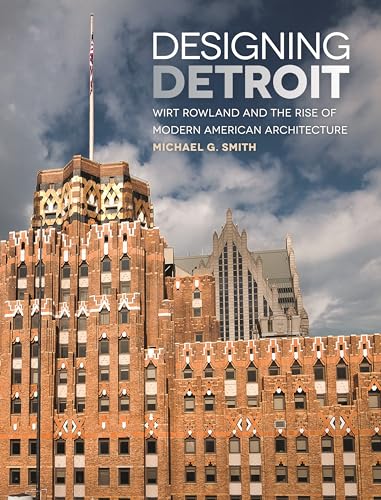
Designing Detroit: Wirt Rowland and the Rise of Modern American Architecture (Great Lakes Books)
Couldn't load pickup availability
About this book
In the early 1900s Detroit was leading the nation in architectural innovation and designer Wirt Rowland was at the forefront of this advancement yet few are even aware of his substantial contribution to the evolution of architectural style. It is widely believed that celebrated local architect Albert Kahn designed many of Detroits structures such as the General Motors and First National Bank buildings. In fact while Kahns efforts were focused on running his highly successful firm it was Rowland his chief designer who was responsible for the appearance and layout of these buildingsan important point in appreciating the contributions of both Kahn and Rowland. During the early twentieth century Rowland devised a wholly new or "modern" design for buildings one not reliant on decorative elements copied from architecture of the past. As buildings became more specialized for their intended use Rowland met the challenge with entirely new design methodologies and a number of improved technologies and materials that subsequently became commonplace. Designing Detroit: Wirt Rowland and the Rise of Modern American Architecture begins with a brief overview of Rowlands early life and career. Author Michael G. Smith goes on to analyze Rowlands achievements in building design and as a leader of Detroits architectural community throughout both World Wars and the Great Depression. The interdependence of architecture with the citys fluctuating economic prosperity and population growth is explored illuminating the conditions for good architecture and the arts in general. The author identifies the influence of Jay Hambidges "dynamic symmetry" in Rowlands work and how it allowed him to employ color as a modern replacement for traditional ornamentation leading to the revolutionary design of the Union Trust (Guardian) Building for which he receives nearly unanimous praise in national media. This book is concerned primarily with Rowlands influence on Detroit architecture but spans beyond his work in Michigan to include the designers broad reach from New York to Miami. A comprehensive appendix includes extensive lists of Rowlands publications locations he had designed and jobs taken on by his firm during his tenure. This book represents new research and insights not previously discussed in either scholarly or general audience texts and will be of interest to casual readers of Detroit history as well as architecture historians.