HomeDictations: On Haunted Writing
Skip to product information
1 of 1

Dictations: On Haunted Writing

paperbackJanuary 1, 1993
Regular price $54.96 USD
Regular price Sale price $54.96 USD
Sale Sold out
Shipping calculated at checkout.
Secure Checkout
Quality Guaranteed
New In Stock
ISBN-13: 9780803289451 ISBN-10: 0803289456
Publisher
University of Nebraska Press
Binding
paperback
Published
January 1, 1993
Weight
0.7 lbs
Dimensions
22.90×1.30×15.90 cm

About this book

Dictations: On Haunted Writing by Ronell, Avital. paperback edition. ISBN: 9780803289451.
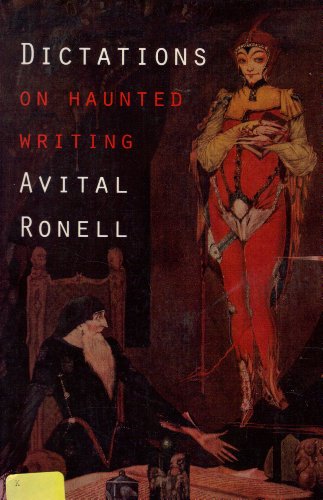
Avital Ronell, author of Crack Wars and The Telephone Book, defies the undefiable. In Dictations she looks at Goethe, the dictator. A figure whose every word is treated with reverence by Germanists, Goethe is exemplary. But of what? As if teetering between life and death, Goethe was born in a legendary way: thought to be stillborn, he was brought to life by extraordinary efforts. Eighty-three years later he died, or seemed to, and was praised as an immortal spirit. His spirit immediately began to haunt. Four years later Johann Peter Eckermann published two volumes recounting his conversations with Goethe. Goethe quickly got the best of him. He spoke eerily through Eckermann to a world eager to hear his latest words. Eckermanns books are usually considered to be by Goethe, and Eckermann himself has become another of Goethes creations. The master of Faust and Wilhelm Meister keeps coming back. He visited the dreams and anxieties of persons as sensitive as Kafka, Nietzsche, and Freud, speaking up in quotations or casting his shadow over poems, stories, and the birth pangs of psychoanalysis. He is a difficult case. Avita Ronell has never shied from the difficult. In Dictations, her first book, originally published in 1986, she starts at the edge of an abyss—the question of spirit, as exemplified by an author whose writings transcended even himself. Often invoked but never seen, spirit has been a matter literary scholars have declined to look at or look for. Here, though restless, it comes into view. In a new preface, Ronell describes the circumstances surrounding the writing and reception of the book.