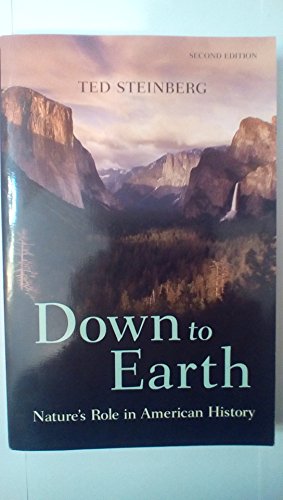
Down to Earth: Nature's Role in American History
Couldn't load pickup availability
About this book
Down to Earth: Nature's Role in American History by Steinberg, Ted. paperback edition. ISBN: 9780195331820.
In this ambitious and provocative text, environmental historian Ted Steinberg offers a sweeping history of the United States--a history that, for the first time, places the environment at the very center of the narrative. Now in a new edition, Down to Earth reenvisions the story of America "from the ground up." It reveals how focusing on plants, animals, climate, and other ecological factors can radically change the way that we think about the past. Examining such familiar topics as colonization, the industrial revolution, slavery, the Civil War, and the emergence of consumer culture, Steinberg recounts how the natural world influenced the course of human history. From the colonists attempts to impose order on the land to modern efforts to sell the wilderness as a consumer good, he reminds readers that many critical episodes in U.S. history were, in fact, environmental events. The text highlights the ways in which Americans have attempted to reshape and control nature, from Thomas Jeffersons surveying plan, which divided the national landscape into a grid, to the transformation of animals, crops, and even water into commodities. In the second edition, Steinberg has thoroughly revised and updated the section on the twentieth century. He also introduces a timely new theme--the rise of the corporation. By addressing the ways in which nature functions in the world of big business, as well as the efforts by environmentalists to combat corporate power, Steinberg provides a richer understanding of consumerism. Down to Earth is ideal for courses in environmental history, environmental studies, urban studies, economic history, and American history. Passionately argued and thought provoking, this powerful text retells our nations history with nature in the foreground--a perspective that will challenge our view of everything from Jamestown to McDonalds.