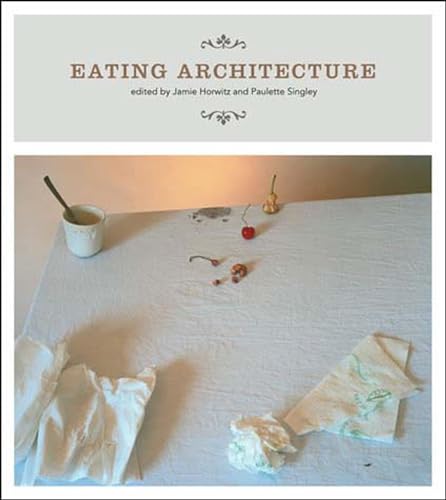
Eating Architecture
Couldn't load pickup availability
About this book
Eating Architecture by Horwitz, Jamie. paperback edition. ISBN: 9780262582674.
A highly original collection of essays that explore the relationship between food and architecture—the preparation of meals and the production of space. The contributors to this highly original collection of essays explore the relationship between food and architecture, asking what can be learned by examining the (often metaphorical) intersection of the preparation of meals and the production of space. In a culture that includes the Food Channel and the knife-juggling chefs of Benihana, food has become not only an obsession but an alternative art form. The nineteen essays and "Gallery of Recipes" in Eating Architecture seize this moment to investigate how art and architecture engage issues of identity, ideology, conviviality, memory, and loss that cookery evokes. This is a book for all those who opt for the "combination platter" of cultural inquiry as well as for the readers of M. F. K. Fisher and Ruth Reichl. The essays are organized into four sections that lead the reader from the landscape to the kitchen, the table, and finally the mouth. The essays in "Place Settings" examine the relationships between food and location that arise in culinary colonialism and the global economy of tourism. "Philosophy in the Kitchen" traces the routines that create a site for aesthetic experimentation, including an examination of gingerbread houses as art, food, and architectural space. The essays in "Table Rules" consider the spatial and performative aspects of eating and the ways in which shared meals are among the most perishable and preserved cultural artifacts. Finally, "Embodied Taste" considers the sensual apprehension of food and what it means to consume a work of art. The "Gallery of Recipes" contains images by contemporary architects on the subject of eating architecture.