
HomeSelf-HelpFamily Whispering: The Baby Whisperer's Commonsense Strategies for Communicating and Connecting with the People You Love and Making Your Whole Family Stronger
Skip to product information
1 of 1

Family Whispering: The Baby Whisperer's Commonsense Strategies for Communicating and Connecting with the People You Love and Making Your Whole Family Stronger

hardcoverFebruary 18, 2014
Regular price $64.08 USD
Regular price Sale price $64.08 USD
Sale Sold out
Shipping calculated at checkout.
Secure Checkout
Quality Guaranteed
New In Stock
ISBN-13: 9781451654462 ISBN-10: 1451654464
Publisher
Atria Books
Binding
hardcover
Published
February 18, 2014
Weight
1.8 lbs
Dimensions
23.20×2.50×18.70 cm

About this book

Family Whispering: The Baby Whisperer's Commonsense Strategies for Communicating and Connecting with the People You Love and Making Your Whole Family Stronger by Blau, Melinda. hardcover edition. ISBN: 9781451654462.
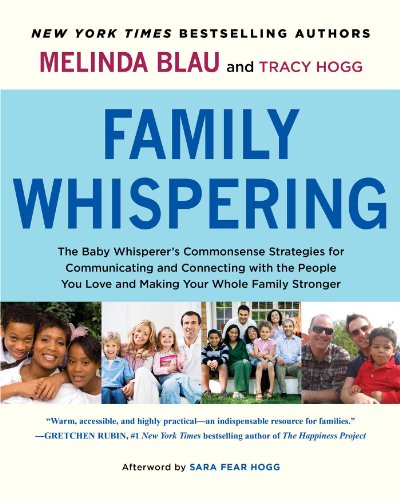
The long awaited Baby Whisperer’s guide to building a strong and loving family. Parenting is something you do. Family is something you are. —Tracy Hogg Before her untimely death in 2004, Tracy—aka the Baby Whisperer—and her longtime collaborator, journalist Melinda Blau, conceived a fourth book that would apply the commonsense principles of baby whispering to the “whole family.” This ground-breaking book explains why “family” is defined by much more than the relationship between parent and child. By widening the lens to focus on the family as an entity, Blau uses the Baby Whisperer philosophy to illuminate how the multiple bonds and interactions that unfold within a household of adults and children coalesce to form a larger family dynamic. By taking this wider perspective, she enables readers to see everyday challenges—such as sibling rivalry, communication, and time management—with fresh eyes. Informed both by research and stories of real families, this new book is filled with the handy tips and memorable acronyms that Baby Whisperer fans have come to expect. The advice is simple, practical, and often counterintuitive (asking kids to help more around the home can make them happier; setbacks can often make a family closer). The hopeful message is that with insight, awareness, and “family-think,” we can actually design our families to be happier and more productive, improving the daily lives of parents and kids—and, thereby, benefiting society as a whole in the process.