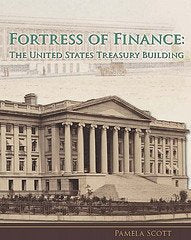
Fortress of Finance: The United States Treasury Building
Couldn't load pickup availability
About this book
Fortress of Finance: The United States Treasury Building by Pamela Scott. hardcover edition. ISBN: 9780615366296.
Excerpt from the Foreword: The United States Treasury Building is perhaps the most recognized government office building in the country. Every American and people around the world who have ever handled the U.S. ten-dollar bill have see the Treasure Building on the reverse of the currency since 1929. Pamela Scotts Fortress of Finance provides us a detailed account of the development of the Treasury Departments workplace in Washington from the beginning of the capital city in 1800 with the creation of the departments first facility, the Treasury Office, to the completion of the current Treasury Building. Each was the largest executive office building in Washington when it was built and housed the largest civilian agency of those times. The Treasury Office and Treasury Building were products of architects who have earned great fame either before or after their work for the Treasury. These men - George Hadfield, James Hoban, Robert Mills, Thomas U. Walter, Ammi B. Young, Isaiah Rogers, and Alfred B. Mullett - were among the most influential, respected, and talented architects of their time and had the greatest impact on the development of the federal buildings in Washington, as well as of government field office facilities throughout the nation. Ms. Scotts research, spanning more than eight years, has enabled her to reveal to us the trials and tribulations of each of these creative architects who were challenged with debates about building design, construction methods, material selection and delivery, employee and contractor work hours and project scheduling.