
Jomon Of Japan: The World's Oldest Pottery
Couldn't load pickup availability
About this book
Jomon Of Japan: The World's Oldest Pottery by Douglas Moore Kenrick. Hardcover edition. ISBN: 9780710304759.
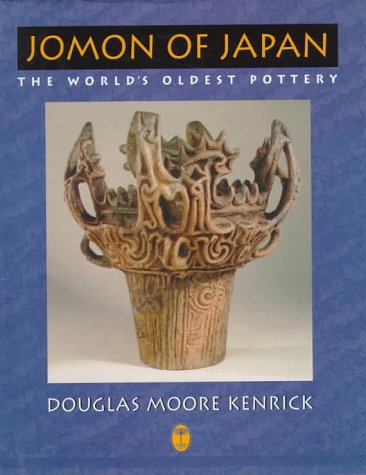
The prehistoric hunter-gatherer culture known as the Jomon was already well researched in Japan when, during the 1960s, scientific tests indicated that the very earliest of the Jomon pottery had been made more than 12,000 years ago. Japanese reaction was twofold: according to the archaeological establishment the tests were wrong, while some of the new wave of archaeologists believed that the tests were reliable and that it was only a matter of time before similar tests indicated even earlier dates for pottery from China and elsewhere. Since the 1960s, supporting evidence and many more tests have substantiated the 12,000 year result, and nowhere else in the world has provided such early evidence. By the 1970s the primacy of the Jomon potters was accepted by most archaeologists in Japan, and was beginning to be recognized in the West. However, recognition is far from complete, largely due to a lack of any comprehensive account of Jomon pottery in the English language. In Jomon of Japan Douglas Kenrick provides just such an account, and compares Jomon dates with those of other early pottery cultures. Douglas Kenrick describes how, in the isolation of the Japanese islands, Jomon pottery was made for no less than 10,000 years. During those ten millennia, Jomon technology did not change and the pottery remained hand-made. Jomon potters developed exceptional levels of skill, and employed an unparalleled variety of decorative techniques ranging from incision and applique, through cord-marking and relief modelling, to extravagant sculptural effects. Their repertoire of shapes ranges from the utilitarian to the ceremonial, and extends even to the experimental, while their schemes of decoration, textural and sculptural, encompass the naturalistic and the abstract.