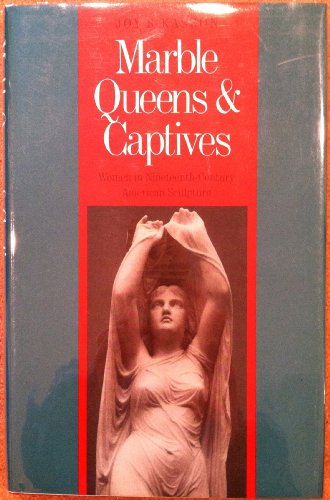
Marble Queens and Captives: Women in Nineteenth-Century American Sculpture
Couldn't load pickup availability
About this book
Marble Queens and Captives: Women in Nineteenth-Century American Sculpture by Kasson, Professor Joy S.. hardcover edition. ISBN: 9780300045963.
When nineteenth-century Americans looked at a statue of a nude woman in chains, or a shipwrecked mother and child, what did they see? When they talked or wrote about them, what did they say? In this engrossing book, Joy S. Kasson argues that there was a connection between the popularity of artworks such as these, which derive from a sentimental literary culture, and the rapidly changing social, economic, and political environment that was beginning to raise questions about womens nature and role in society. By exploring the once-popular genre of ideal sculpture, with its focus on female subjects and its insistence on narrative content, Kasson is able to shed light on conventional assumptions about gender roles, as well as the tensions that lay behind these beliefs. Kasson reconstructs the intellectual, aesthetic, and literary contexts in which these sculptures were viewed and traces the social history of their production and reception. She shows that sculptors and audiences repeatedly idealized women as fragile, endangered, and vulnerable. Immoral or powerful women, such as Eve, Pandora, or Medea, were presented in a web of sentimental narrative that hinted at moral redemption in order to reassure viewers that womans true nature would remain domestic and maternal. Kasson looks closely at a number of sculptures that exemplified these themes―from Hiram Powers The Greek Slave to works by the most prominent female sculptor of the period, Harriet Hosmer. Resurrecting these forgotten artworks and explicating their narrative context, she provides fresh insights into the cultural construction of gender in nineteenth-century America.