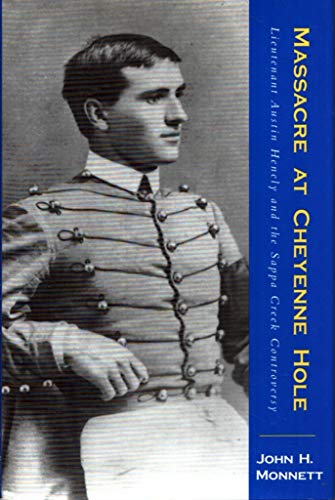

Massacre at Cheyenne Hole: Lieutenant Austin Henley and the Sappa Creek Controversy
Couldn't load pickup availability
About this book
Massacre at Cheyenne Hole: Lieutenant Austin Henley and the Sappa Creek Controversy by Monnett, John H.. hardcover edition. ISBN: 9780870815270.
On the morning of April 23, 1875, H Company, 6th U.S. Cavalry attacked and destroyed a Cheyenne camp located on the middle fork of Sappa Creek, a tributary of the Republican River in what is today Rawlins County, Kansas. The ensuing engagement was the last important military action of the Red River War and the last fought on the central plains between the U.S. Army and an independent band of Indians composed principally of Southern Cheyennes. In Massacre at Cheyenne Hole, John H. Monnett sifts through the various interpretations of the event over the years and places them into proper historical perspective. Initially, Lieutenant Austin Henely was viewed as a hero, and his H Company men were awarded eight Medals of Honor for their bravery in the skirmish. However, later intimations surfaced that the Sappa Creek fight was a massacre of the Cheyennes under Little Bull who attempted to surrender. Tales of innocent noncombatants being murdered in the destruction of the camp following the battle were common by the early twentieth century. Avoiding the current approach of separating the participants into clear camps of victims and victimizers, Monnett instead uses the Sappa Creek battle as a case study to understand how Americans since 1875 have perceived the Indian wars in general within the larger cultural construct. By studying the Sappa Creek Massacre and its remaining mysteries from this perspective, Monnett reveals as much about how Americans view Western history and the theme of manifest destiny as he does about what we can accurately conclude from the facts of the battle. Massacre at Cheyenne Hole is a welcome addition to the literature about the Indian wars and the Cheyenne Indians, and will appeal to both historians and the general reader interested in military and Native American history.