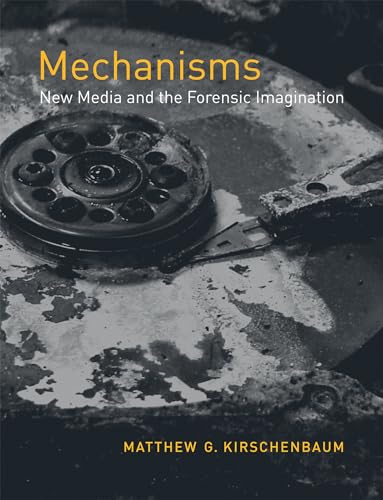

Mechanisms: New Media and the Forensic Imagination
Couldn't load pickup availability
About this book
Mechanisms: New Media and the Forensic Imagination by Kirschenbaum, Matthew G.. paperback edition. ISBN: 9780262517409.
A new “textual studies” and archival approach to the investigation of works of new media and electronic literature that applies techniques of computer forensics to conduct media-specific readings of William Gibsons electronic poem “Agrippa,” Michael Joyces Afternoon, and the interactive game Mystery House. In Mechanisms, Matthew Kirschenbaum examines new media and electronic writing against the textual and technological primitives that govern writing, inscription, and textual transmission in all media: erasure, variability, repeatability, and survivability. Mechanisms is the first book in its field to devote significant attention to storage—the hard drive in particular—arguing that understanding the affordances of storage devices is essential to understanding new media. Drawing a distinction between “forensic materiality” and “formal materiality,” Kirschenbaum uses applied computer forensics techniques in his study of new media works. Just as the humanities discipline of textual studies examines books as physical objects and traces different variants of texts, computer forensics encourage us to perceive new media in terms of specific versions, platforms, systems, and devices. Kirschenbaum demonstrates these techniques in media-specific readings of three landmark works of new media and electronic literature, all from the formative era of personal computing: the interactive fiction game Mystery House, Michael Joyces Afternoon: A Story, and William Gibsons electronic poem “Agrippa.”