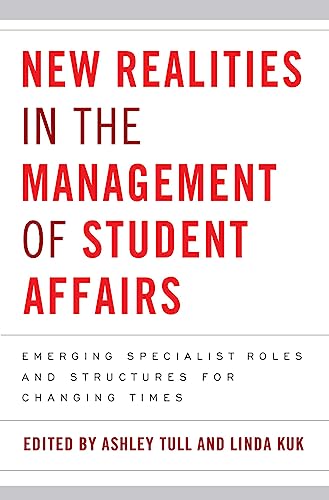
New Realities in the Management of Student Affairs: Emerging Specialist Roles and Structures for Changing Times
Couldn't load pickup availability
About this book
New Realities in the Management of Student Affairs: Emerging Specialist Roles and Structures for Changing Times by Tull, Ashley. paperback edition. ISBN: 9781579225766.
Student affairs organizations are at a crossroads. They face expanding enrollments; a concomitant increase need for often more complex services; changing demographics; a growing cohort of non-traditional and first-generation students; shifting and more demanding responsibilities; and increased expectations from the greater campus community, parents, and external constituents. These challenges are intensified by the accelerating speed of advancements in technology, globalization, innovation, and student consumerism; and by the long-term reality of shrinking resources, and limitations on the ability to increase tuition and fees. This book shares alternative ideas about organizational design, and about ways to restructure roles and responsibilities to enable student affairs organizations to respond to these challenges and demands more effectively at a time of reduced resources. It also addresses the many emerging roles that student affairs organizations are increasingly being expected to address – such as IT, fund raising and development, external communications, human resources management and professional development, as well as research and assessment – and describes approaches developed by a variety of institutions. The contributors also pay attention to the solutions appropriate for smaller institutions, and for community colleges. They explore the various dimensions of change and offer frameworks to help student affairs leaders and practitioners to more effectively understand and manage the changes they are confronting; and describe ideas and solutions adopted by others within the profession. within the profession.