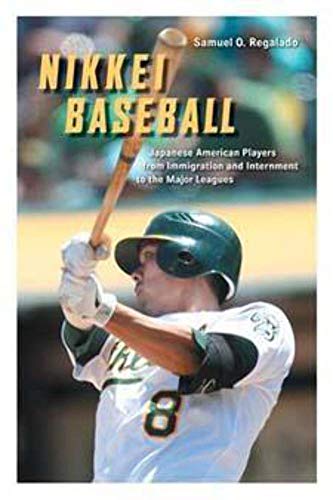
Nikkei Baseball: Japanese American Players from Immigration and Internment to the Major Leagues
Couldn't load pickup availability
About this book
Nikkei Baseball: Japanese American Players from Immigration and Internment to the Major Leagues by Regalado, Samuel O.. paperback edition. ISBN: 9780252078835.
Nikkei Baseball examines baseballs evolving importance to the Japanese American community and the construction of Japanese American identity. Originally introduced in Japan in the late 1800s, baseball was played in the United States by Japanese immigrants first in Hawaii, then San Francisco and northern California, then in amateur leagues up and down the Pacific Coast. For Japanese American players, baseball was seen as a sport that encouraged healthy competition by imposing rules and standards of ethical behavior for both players and fans. The value of baseball as exercise and amusement quickly expanded into something even more important, a means for strengthening social ties within Japanese American communities and for linking their aspirations to Americas pastimes and Americas promise. With World War II came internment and baseball and softball played behind barbed wire. After their release from the camps, Japanese Americans found their reentry to American society beset by anti-Japanese laws, policies, and vigilante violence, but they rebuilt their leagues and played in schools and colleges. Drawing from archival research, prior scholarship, and personal interviews, Samuel O. Regalado explores key historical factors such as Meji-era modernization policies in Japan, American anti-Asian sentiments, internment during World War II, the postwar transition, economic and educational opportunities in the 1960s, the developing concept of a distinct "Asian American" identity, and Japanese Americans rise to the major leagues with star players including Lenn Sakata and Kurt Suzuki and even managers such as the Seattle Mariners Don Wakamatsu.