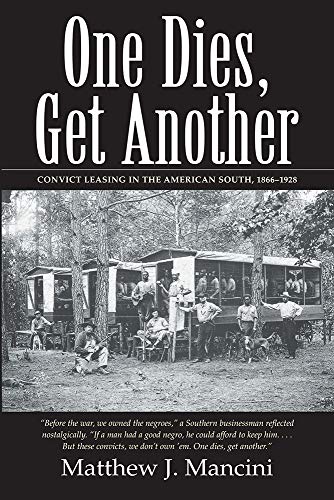

One Dies, Get Another: Convict Leasing in the American South, 1866-1928
Couldn't load pickup availability
About this book
One Dies, Get Another: Convict Leasing in the American South, 1866-1928 by Mancini, Matthew J.. hardcover edition. ISBN: 9781570030833.
A chronicle one of the harshest, most exploitative labor systems in American history In his seminal study of convict leasing in the post-Civil War South, Matthew J. Mancini chronicles one of the harshest, most exploitative labor systems in American history. Devastated by war, bewildered by peace, and unprepared to confront the problems of prison management, Southern states sought to alleviate the need for cheap labor, a perceived rise in criminal behavior, and the bankruptcy of their state treasuries. Mancini describes the policy of leasing prisoners to individuals and corporations as one that, in addition to reducing prison populations and generating revenues, offered a means of racial subordination and labor discipline. He identifies commonalities that, despite the seemingly uneven enforcement of convict leasing across state lines, bound the South together for more than half a century in reliance on an institution of almost unrelieved brutality. He describes the prisoners daily existence, profiles the individuals who leased convicts, and reveals both the inhumanity of the leasing laws and the centrality of race relations in the establishment and perpetuation of convict leasing. In considering the longevity of the practice, Mancini takes issue with the widespread notion that convict leasing was an aberration in a generally progressive history of criminal justice. In explaining its dramatic demise, Mancini contends that moral opposition was a distinctly minor force in the abolition of the practice and that only a combination of rising lease prices and years of economic decline forced an end to convict leasing in the South.