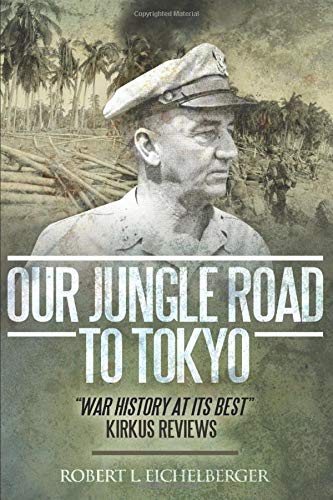

Our Jungle Road to Tokyo
Couldn't load pickup availability
About this book
War history at its best Kirkus Reviews On 20 August 1942 Robert L. Eichelberger departed the United States for Australia to serve under General Douglas MacArthur in the war for the Pacific. He was thrown into the heat of the action as within a matter of months the Allied armies stormed the Japanese beachheads at Buna. Eichelberger stated that though the Buna campaign was the first Allied Ground Force victory in the Pacific it was bought at a substantial price in death wounds disease despair and human suffering. For the next three years Eichelberger and the men that he led fought bloody campaigns at Biak Leyte Mindanao and elsewhere as they attempted to defeat the Japanese. Eichelberger and the Eighth Army conducted fifty-two separate D-days between the Battle of Leyte and the Japanese surrender. It is little wonder therefore that John C. Frederiksen in American Military Leaders stated that Eichelberger was The Pacific theaters most successful exponent of amphibious warfare. Our Jungle Road to Tokyo is not merely an account of military operations as Eichelberger also comments on Australian-American relations through the Pacific campaign Mrs. Roosevelts visit to the troops the daily life of his men how they survived the inhospitable jungles of the pacific islands and the realities of the military occupation of Japan. a vital record on an important phase of the Pacific story. Kirkus Reviews The wartime commander of the Eighth Army gives a straightforward and modest account of the campaigns of the Army ground forces from the Buna operation to the Philippines and victory. Henry L. Roberts Foreign Affairs Robert L. Eichelberger was a lieutenant-general in the United States Army who commanded the Eighth United States Army in the Southwest Pacific Area during World War Two. After the end of the war he remained in Japan as part of the occupying army for three years. He retired at the end of this stint in 1948. Our Jungle Road to Tokyo was published in 1950. He lived the rest of his life in Asheville North Carolina and passed away in 1961.