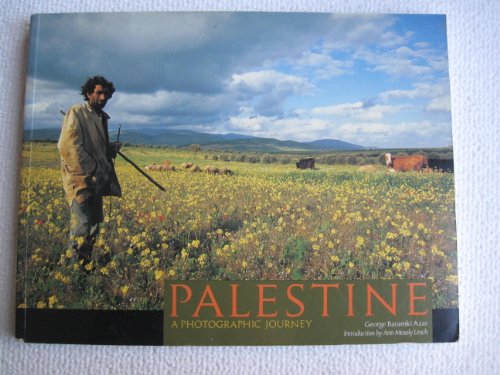

Palestine: A Photographic Journey
Couldn't load pickup availability
About this book
Palestine: A Photographic Journey by Azar, George Baramki. paperback edition. ISBN: 9780520075443.
An unforgettable photographic journal of the "shadows" of the Arab world―at turns invisible, unknown, and threatening to some―this work gathers images of the Palestinians during the first few months of 1988 when the intifada was beginning to gain momentum. We have come to visually associate the terms "intifada" and "Palestinian" solely with images of young men wrapped in kafiyyehs hurling rocks at Israeli soldiers. The photos gathered here are different. They grant us the rare opportunity to see facets of the Palestinians not portrayed in the popular media: the beauty of the land, the life of the sheepherders, the joy of the children, the quiet defiance of the elders, the dignity they all salvage. From 1981 to 1987 George Azar chronicled the Israeli invasion of Lebanon, the destruction of the U.S. Marine compound, the civil insurrection in West Beirut, the Iran-Iraq War and the interfactional war among the Palestinians in North Lebanon. He saw gun battles and deaths so numerous that his memory of them has become a blur. Leaving the horror of Beirut, Damour, and Tripoli behind, he resisted the thought of going back. But in early January 1988, news reports showed the people of the refugee camps, the villages, and the towns in the West Bank and the Gaza Strip taking to the streets. He returned to the occupied territories later that month and began taking these pictures. This book bears witness to Palestinian lives and by doing so gives the Other a human face. The texts that accompany the photographs are taken from eyewitness testimonies, open letters, news clippings, interviews, and Arabic poetry. An introductory essay by Ann M. Lesch describes the genesis of the intifada movement and its interactions with the Israeli government. Despite death, deportation, and the destruction of their homes, the Palestinians remain steadfast, convinced that one day the horror of military occupation will end and they will be able to live once again. This work is a testament to that conviction.