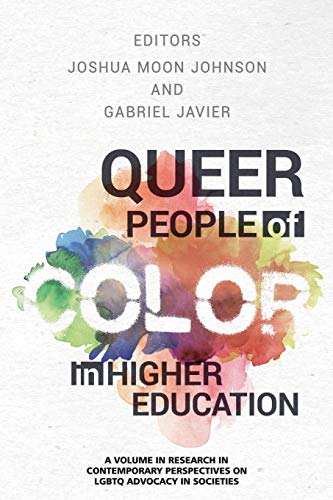

Queer People of Color in Higher Education (Contemporary Perspectives on LGBTQ Advocacy in Societies)
Couldn't load pickup availability
About this book
Queer People of Color in Higher Education (Contemporary Perspectives on LGBTQ Advocacy in Societies) by Johnson, Joshua Moon. paperback edition. ISBN: 9781681238814.
Queer People of Color in Higher Education (QPOC) is a comprehensive work discussing the lived experiences of queer people of color on college campuses. This book will create conversations and provide resources to best support students, faculty, and staff of color who are people of color and identify as LGBTQ. The edited volume covers emerging issues that are affecting higher education around the country. Leading researchers and practitioners have remarkable writing that concisely summarizes current literature while also adding new ways to address issues of injustice related to racism, sexism, homophobia, heterosexism, and transphobia. QPOC in Higher Education insightfully combines research with practical implications on services, systems, campus climate and ways to hostility, violence, and unrest on campuses. This book rises out of places of turmoil and pain and brings attention to broken systems on higher education. QPOC in Higher Education is a must-read for anyone who wants to transform their society, campus, or community into places that fully value the complex and beautiful intersections that our diverse communities come from. This book takes diversity to a deeper level and speaks from a social justice philosophy of looking big pictures at our systems and cultures instead of simply at our oppressed groups as the problems.