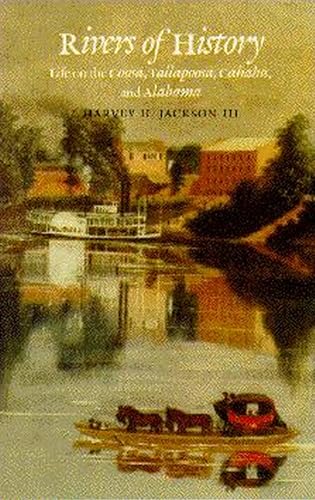
Rivers of History: Life on the Coosa Tallapoosa Cahaba and Alabama
Couldn't load pickup availability
About this book
An illuminating study of how rivers shaped the history culture and environment of Alabama and the American South. In Rivers of History acclaimed historian Harvey H. Jackson III blends environmental history with compelling storytelling and traces the evolving relationship between people and riversfrom Indigenous communities who first depended on these waterways to European settlers to the development of modern towns and industries. Along the way readers encounter stories of transportation and trade conflict and cooperation ecological change and conservation all tied to the flow of these essential rivers. Far more than a geographical study Rivers of History demonstrates how waterways act as lifelines of human experience. Rivers shaped patterns of settlement enabled agricultural and economic growth and served as critical channels for communication across the American South. At the same time they created challengesflooding environmental degradation and competing demands for natural resourcesthat continue to influence life in the region today. Jackson shows how the history of Alabama cannot be understood apart from its rivers. The Coosa Tallapoosa Cahaba and Alabama rivers emerge not simply as physical features on a map but as powerful forces that connect past and present nature and society. His interdisciplinary approachbringing together history geography and environmental studiesmakes this work especially valuable for students scholars and general readers alike. Accessible yet authoritative Rivers of History is essential reading for anyone interested in Southern history environmental change or the enduring relationship between landscapes and human communities. It offers a compelling reminder that the story of a place is often written in the movement of its waters.