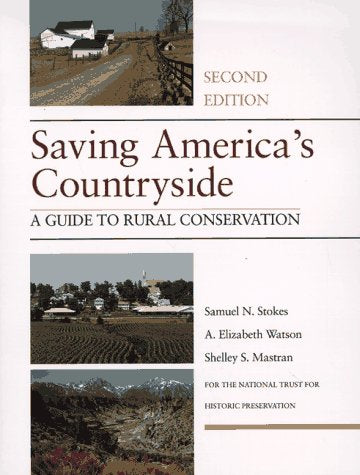
Saving America's Countryside: A Guide to Rural Conservation (National Trust for Historic Preservation S)
Couldn't load pickup availability
About this book
Saving America's Countryside: A Guide to Rural Conservation (National Trust for Historic Preservation S) by Stokes, Samuel N.. paperback edition. ISBN: 9780801855481.
"[These] stories―of stopping unwanted highways, protecting open space, finding financing to preserve historical buildings―make Saving Americas Countryside an inspiring resource guide."―Utne Reader A new edition of the book that received the Historic Preservation Book Prize and the American Society for Landscape Architects Honor Award Since publication of the first edition of Saving Americas Countryside in 1989, the fight to save Americas rural resources has met with much success. Approaches considered experimental just a decade ago―greenways and heritage areas, for example―are now widespread. Yet at the same time, such disquieting developments as continuing suburban sprawl, the weakening of federal laws, and the so-called property rights movement all suggest that work remains to be done. Saving Americas Countryside was the first and is still the only comprehensive, step-by-step guide to protecting the natural, historic, scenic, and agricultural resources of a rural community. The authors show how to organize a conservation effort, inventory available resources, pass effective new laws, set up land trusts, take advantage of federal programs, and change public attitudes. The thoroughly revised and updated second edition reports on changes in conservation over the past eight years and adds a chapter on making economic development compatible with rural conservation. It includes new case studies, more than fifty new illustrations, and a section on heritage tourism. As in the previous edition, the detailed case studies document a variety of successful―and often surprisingly innovative―conservation efforts by residents of rural communities throughout the United States.