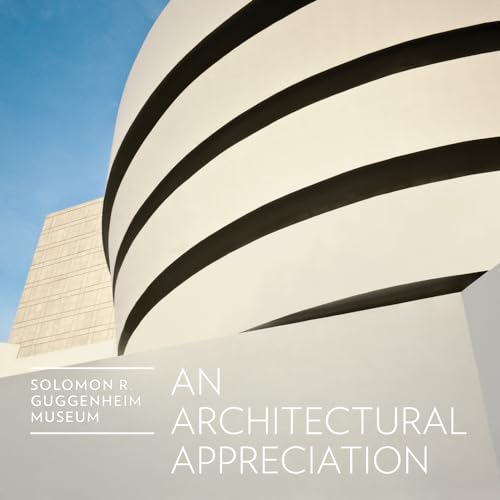
Solomon R. Guggenheim Museum: An Architectural Appreciation
Couldn't load pickup availability
About this book
Solomon R. Guggenheim Museum: An Architectural Appreciation. hardcover edition. ISBN: 9780892074907.
In 1943, Frank Lloyd Wright received a letter from Hilla Rebay, the art advisor to Solomon R. Guggenheim, asking the architect to design a new building to house Guggenheim’s four-year-old Museum of Non-Objective Painting. The project evolved into a complex struggle pitting the architect against his clients, city officials, the art world and public opinion, but the resultant achievement testifies to both Wright’s architectural genius and the adventurous spirit of its founders. The Guggenheim Museum is an embodiment of Wright’s attempts to render the inherent plasticity of organic forms in architecture. His inverted ziggurat dispensed with the conventional approach to museum design, which led visitors through a series of interconnected rooms and forced them to retrace their steps when exiting. Instead, Wright whisked people to the top of the building via elevator, and led them downward at a leisurely pace on the gentle slope of a continuous ramp. The galleries were divided like the segments of an orange, into self-contained yet interdependent sections. The open rotunda afforded viewers the unique possibility of seeing several bays of work on different levels simultaneously. The spiral design recalled a nautilus shell, with continuous spaces flowing freely one into another. Solomon R. Guggenheim Museum: An Architectural Appreciation celebrates Wright’s crowning achievement with reflections by prominent architects, historians and critics. Paired alongside a half-century of photographs, they convey how, as Paul Goldberger has said, “almost every museum of our time is a child of the Guggenheim.”