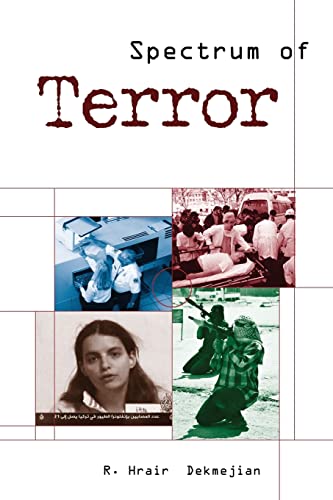
Spectrum of Terror
Couldn't load pickup availability
About this book
Spectrum of Terror by Dekmejian, Richard H.. paperback edition. ISBN: 9781933116907.
Since 9/11, images of fanatical jihadists have become the international symbol of terrorism. In the wake of the attacks, journalists and academics alike have taken up the task of trying to make sense of these seemingly alien terrorist organizations. Many of these sources have perpetuated the idea that terrorists are unknowable or irrational. What is often missed is the degree to which terrorists have motivations that can be grasped and understood. In his new text, Dekmejian places terrorism within a spectrum of political violence, creating a typology of terror based on scale and intent as well as by type of actor―from isolated attacks by individual bombers, to large scale attacks against state targets by organized networks, to state-sponsored genocide and politicide―thus facilitating comparisons across multiple cases. As well, the book’s model of conflict is informed by game theory, enriched with understandings of psychological, cultural, and historical contexts, helping students focus on the strategies and desired outcomes of different parties to conflict. This analytic approach enables students to trace the changes in mutual perceptions and preferences between terrorists and their targets and leads to a fuller understanding of the causes and dynamics of political violence. The book’s uniquely comprehensive coverage of terrorism includes extended cases on the IRA, the Tamil Tigers, Chechen rebels, Al Qaeda, Aum Shinrikyo, Hizbullah, and Hamas. Each case looks at the historical origins, political factors, leadership, and organization of the group to give context. Discussions of typical tactics, patterns of violence, the role of external actors, and outcomes help readers to explore possible solutions that might stop the cycle of violence and promote peaceful coexistence among the antagonists. Appendix materials include glossaries of terrorist groups and technical terms.