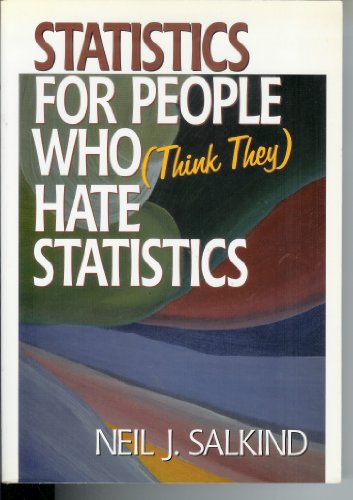
Statistics for People Who (Think They) Hate Statistics
Couldn't load pickup availability
About this book
Downloadable data sets: http://www.soe.ku.edu/faculty/Salkind/Statsfpwhs/ "This book speaks to students!" --Lewis H. Margolis Public Health UNC Chapel Hill "A well written well organized and understandable introduction to statistical reasoning use and what meaning they may have the reader will have a much better grasp of statistics and a better ability to consume social science research." --Ralph Underwager Institute for Psychological Therapies Intended for people who want to learn or brush-up on the basics of statistics but question their abilities this book offers a slow-paced entertaining introduction to the topic. Using playful headings to encourage students to read further the book begins with an introduction to the "language" of statistics and then covers descriptive statistics (from computing measures of central tendency to distributions and curve plotting to graphing data) and inferential statistics (including probability statistical significance correlation/regression ANOVA and multiple regression). Throughout the book Salkind offers readers: - A Difficulty Rating Index for each chapter - Tips for doing and thinking about a statistical technique - Top Ten for everything from the best ways to create a graph to the most effective techniques for data collection - Tech talk boxes for readers who want additional details and commentary on statistical procedures - Things to Remember that offer readers reviews and reminders of how material presented earlier relates to a technique down into a clear sequence of procedures - SPSS Tips for executing each major statistical technique - Practice exercises at the end of each chapter followed by worked out solutions The book concludes with a statistical software sampler and a description of the best Internet sites for statistical information and data resources. Readers of the book will also have access to a website for downloading actual data that they can use to practice additional exercises from the book. Researchers and students who find themselves uncomfortable with the analysis portion of their work will appreciate this books unhurried pace and thorough friendly presentation.