The Art of Rice: Spirit and Sustenance in Asia
Couldn't load pickup availability
About this book
The Art of Rice: Spirit and Sustenance in Asia by Ammayao, Aurora. paperback edition. ISBN: 9780930741983.
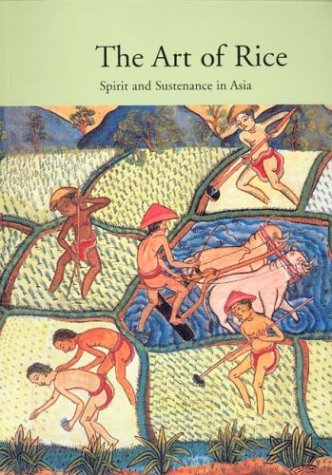
The term Asia is a problematic and highly artificial construct, because hardly anything--not language, religion, politics, or even geography--unites this huge area. Within the context of this study, however--which focuses on parts of South, Southeast, and East Asia (home to the vast majority of the population)--there exists a unifying factor of paramount significance: rice. Not only is rice the staple food in these regions, it is the focal point of a pervasive set of interrelated beliefs and practices. For those who consume it, this foodstuff is considered divinely given and is felt to sustain them in a special way, one that may be understood as constitutional and even spiritual. This volume explores beliefs and practices relating to rice as they are made manifest in the unique arts and material cultures of the various peoples considered. Incorporating essays by twenty-seven authorities representing a wide variety of cultures and writing from diverse perspectives, the book is astounding in its polyphony. The thirty-five lavishly illustrated essays describe rice-related rituals and beliefs in parts of Thailand, Nepal, India, Indonesia, the Philippines, Vietnam, Japan, China, and Korea. Throughout, the juxtaposition of magnificent photographs of works of art--paintings, prints, ceramics, textiles, lacquerware, and sculpture--with objects of a more humble nature--agriculturalimplements,rice-straw ornaments, cooking utensils, baskets, puppets, votive plaques, and more--serves to indicate the striking pervasiveness of rice in all aspects and all walks of life. Wedding ceremonies, parades, festivals, celebrations of birth, rites held to honor the rice goddess, and those performed to ensure success at every step in the rice-growing cycle are vividly described and illustrated with striking field photographs. The whole gives the reader the rare opportunity to compare similarities and differences in how a rich array of Asian cultures views the food that nourishes them.