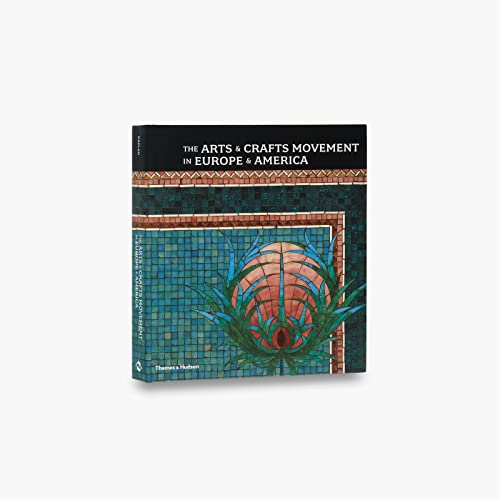

The Arts and Crafts Movement in Europe and America: Design for the Modern World 1880-1920
Couldn't load pickup availability
About this book
The first assessment of the truly international influence of the Arts and Crafts movement published to accompany a groundbreaking exhibition. At the turn of the last century the Arts and Crafts movement transformed not only how objects looked but also how people looked at objects. It provided a framework for essential issues that are still debated today: the conflict between standardization and individuality the question of whether a one-of-a-kind handcrafted object is superior to a mass-produced one and the problem of defining what kind of design most benefits society. As the most industrialized country Britain was also the first to generate a movement to counter what was seen as the malevolent effects of mass production. Protagonists such as John Ruskin and William Morris championed "joy in labor"the moral and spiritual uplift that would come with the revival of making objects by hand. The improvement of working conditions integration of art into everyday life and an "honest" aesthetic resulting from the use of indigenous materials and native traditions were also central to the movements philosophy. At the end of the nineteenth century these Arts and Crafts ideals were appropriated and adapted by the young avant-garde throughout Europe and the United States. With 260 objectsfurniture ceramics metalwork textiles and works on paperfrom Britain Ireland the United States France Belgium Germany Austria Hungary Scandinavia and Finland this is a visually stunning definitive survey. The book features masterworks by the best-known designers of the period such as William Morris M. H. Baillie Scott Henry Van de Velde Peter Behrens Josef Hoffmann Eliel Saarinen Gustav Stickley Greene and Greene and Frank Lloyd Wright as well as lesser-known examples that have never been displayed together. 360 illustrations 300 in color. With contributions by: Alan Crawford Rudiger Joppien Juliet Kinchin Amy F. Ogata. Elisabet Stavenow-Hidemark Christian Witt-Dorring.