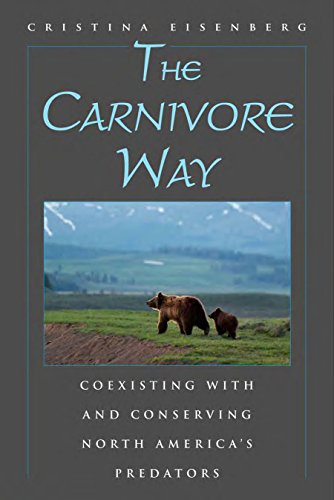
The Carnivore Way: Coexisting with and Conserving North America's Predators
Couldn't load pickup availability
About this book
The Carnivore Way: Coexisting with and Conserving North America's Predators by Eisenberg, Cristina. hardcover edition. ISBN: 9781597269827.
What would it be like to live in a world with no predators roaming our landscapes? Would their elimination, which humans have sought with ever greater urgency in recent times, bring about a pastoral, peaceful human civilization? Or in fact is their existence critical to our own, and do we need to be doing more to assure their health and the health of the landscapes they need to thrive? In The Carnivore Way, Cristina Eisenberg argues compellingly for the necessity of top predators in large, undisturbed landscapes, and how a continental-long corridor—a “carnivore way”—provides the room they need to roam and connected landscapes that allow them to disperse. Eisenberg follows the footsteps of six large carnivores—wolves, grizzly bears, lynx, jaguars, wolverines, and cougars—on a 7,500-mile wildlife corridor from Alaska to Mexico along the Rocky Mountains. Backed by robust science, she shows how their well-being is a critical factor in sustaining healthy landscapes and how it is possible for humans and large carnivores to coexist peacefully and even to thrive. University students in natural resource science programs, resource managers, conservation organizations, and anyone curious about carnivore ecology and management in a changing world will find a thoughtful guide to large carnivore conservation that dispels long-held myths about their ecology and contributions to healthy, resilient landscapes.