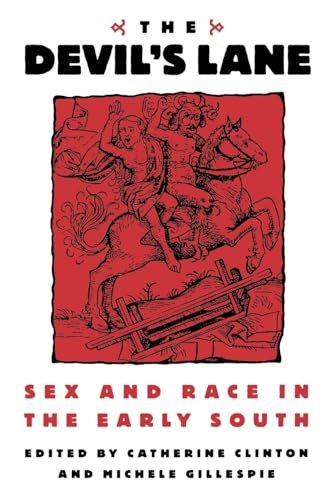
The Devil's Lane: Sex and Race in the Early South
Couldn't load pickup availability
About this book
When Europeans settled in the early South they quarreled over many things--but few imbroglios were so fierce as battles over land. Landowners wrangled bitterly over boundaries with neighbors and contested areas became known as "the devils lane." Violence and bloodshed were but some of the consequences to befall those who ventured into these disputed territories. The Devils Lane highlights important new work on sexuality race and gender in the South from the seventeenth- to the nineteenth-centuries. Contributors explore legal history by examining race crime and punishment sex across the color line and slander. Emerging stars and established scholars such as Peter Wood and Carol Berkin weave together the fascinating story of competing agendas and clashing cultures on the southern frontier. One chapter focuses on a communitys resistance to a hermaphrodite where the town court conducted a series of "examinations" to determine the individuals gender. Other pieces address topics ranging from resistance to sexual exploitation on the part of slave women to spousal murders from interpreting womens expressions of religious ecstasy to a pastors sermons about depraved sinners and graphic depictions of carnage all in the name of "exposing" evil and from a case of infanticide to the practice of state-mandated castration. Several of the authors pay close attention to the social and personal dynamics of interracial womens networks and relationships across place and time. The Devils Lane illuminates early forms of sexual oppression inviting comparative questions about authority and violence social attitudes and sexual tensions the impact of slavery as well as the twisted course of race relations among blacks whites and Indians. Several scholars look particularly at the Gulf South myopically neglected in traditional literature and an outstanding feature of this collection. These eighteen original essays reveal why the intersection of sex and race marks an essential point of departure for understanding southern social relations and a turning point for the field of colonial history. The rich varied and distinctive experiences showcased in The Devils Lane provides an extraordinary opportunity for readers interested in womens history African American history southern history and especially colonial history to explore a wide range of exciting issues.