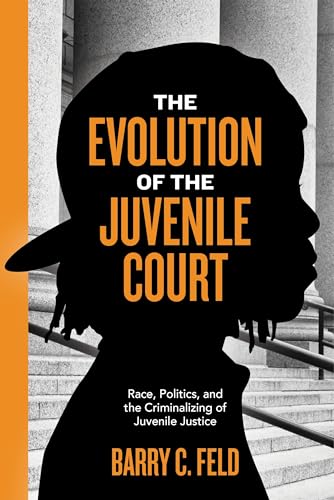
The Evolution of the Juvenile Court: Race Politics and the Criminalizing of Juvenile Justice (Youth Crime and Justice 4)
Couldn't load pickup availability
About this book
Winner 2020 ACJS Outstanding Book Award given by the Academy of Criminal Justice Sciences A major statement on the juvenile justice system by one of Americas leading experts The juvenile court lies at the intersection of youth policy and crime policy. Its institutional practices reflect our changing ideas about children and crime control. The Evolution of the Juvenile Court provides a sweeping overview of the American juvenile justice systems development and change over the past century. Noted law professor and criminologist Barry C. Feld places special emphasis on changes over the last 25 yearsthe ascendance of get tough crime policies and the more recent Supreme Court recognition that children are different. Felds comprehensive historical analyses trace juvenile courts evolution though four periodsthe original Progressive Era the Due Process Revolution in the 1960s the Get Tough Era of the 1980s and 1990s and todays Kids Are Different era. In each period changes in the economy cities families race and ethnicity and politics have shaped juvenile courts policies and practices. Changes in juvenile courts ends and meanssubstance and procedurereflect shifting notions of childrens culpability and competence. The Evolution of the Juvenile Court examines how conservative politicians used coded racial appeals to advocate get tough policies that equated children with adults and more recent Supreme Court decisions that draw on developmental psychology and neuroscience research to bolster its conclusions about youths reduced criminal responsibility and diminished competence. Feld draws on lessons from the past to envision a new developmentally appropriate justice system for children. Ultimately providing justice for children requires structural changes to reduce social and economic inequalityconcentrated poverty in segregated urban areasthat disproportionately expose children of color to juvenile courts punitive policies. Historical prescriptive and analytical The Evolution of the Juvenile Court evaluates the authors past recommendations to abolish juvenile courts in light of this new evidence and concludes that separate but reformed juvenile courts are necessary to protect children who commit crimes and facilitate their successful transition to adulthood.