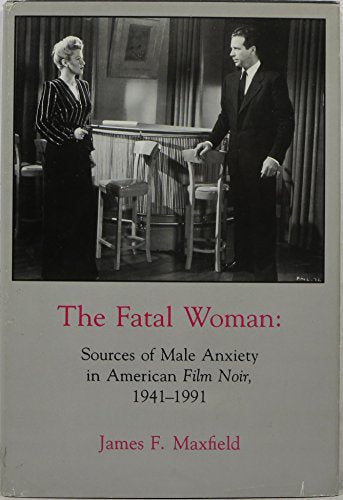
The Fatal Woman: Sources of Male Anxiety in American Film Noir 1941-1991
Couldn't load pickup availability
About this book
This book is primarily a study of the psychological threat posed by attractive female characters to the male protagonists of American detective and crime films over a fifty-year period. In the films of the 1940s (The Maltese Falcon Double Indemnity Murder My Sweet Out of the Past and White Heat) an attractive female character is literally a murderess who poses a threat of varying degrees of intensity to the life of the male protagonist. Alfred Hitchcocks 1956 film Vertigo serves as a transition to a different understanding of the role of the fatal woman. Although Judy/Madeleine has been used by Elster in a plot to murder his wife her degree of complicity in the crime is never made explicit. The film emphasizes not her role in the murder of the real Madeleine but rather her devastating effect on the psyche of the male protagonist of the film Scottie Ferguson. In certain later films although an attractive female character is presented primarily as a victim she nonetheless has an extremely destructive effect on the self-image of the male protagonist. In two films Point Blank and Mean Streets the heros involvement with a woman is less threatening than his emotional dependency on a male friend because a strong emotional tie between men also undermines the illusion of self-sufficiency and dominance that our culture upholds as the male ideal. To be sure two of the later films considered in this volume return to the forties conception of the fatal woman as literal killer. Only in Thelma and Louise the final film under discussion is feminine violence portrayed as in any sense warranted - as a justifiable resistance to male tyranny.