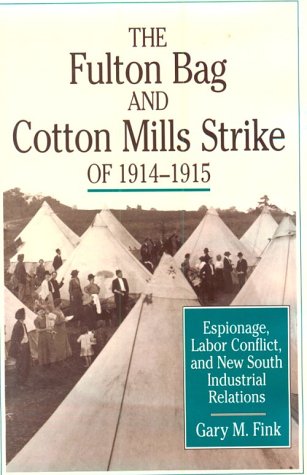
The Fulton Bag and Cotton Mills Strike of 1914-1915: Espionage Labor Conflict and New South Industrial Relations (CORNELL STUDIES IN INDUSTRIAL AND LABOR RELATIONS)
Couldn't load pickup availability
About this book
Mill operatives walked off their jobs at Atlantas Fulton Bag and Cotton Mills complex in the spring of 1914 initiating a strike that involved not only the class conflict inherent in a labor-management dispute but also ethnic confrontations gender divisions social and economic reforms regional and sectional differences and the textile industrys rendition of the gospel of efficiency. The year-long strike that followed was singularly well documented partly by the reports of labor spies paid by management to gather information about striking employees and disrupt union organizing activities. Closely following dramatic confrontations in the northeastern textile industry the Fulton Bag strike attracted national attention drawing teams of investigators from the United States Department of Labor and from the United States Commission on Industrial Relations. Their reports are further supplemented by an unusually detailed photographic record as both sides sought to exploit the camera to win the countrys sympathy. In this richly documented volume Gary M. Fink asks why unionism failed and why industrialists in southern textiles behaved as they did. He suggests that southern textile manufacturers believed that they existed on the brink of economic ruin. The insecurities bred by that assumption combined with their fervent belief in private property rights dictated a specific approach to industrial relations.