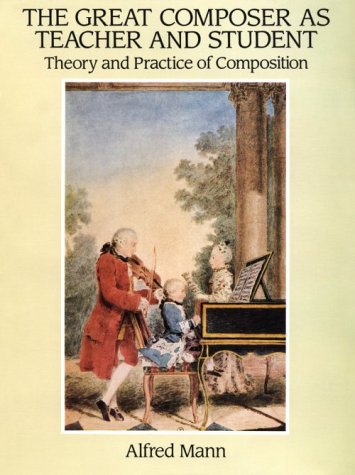
The Great Composer As Teacher and Student: Theory and Practice of Composition
Couldn't load pickup availability
About this book
In this ground-breaking book musicologist Alfred Mann weaves documentary evidence of six great composers as students and teachers into a convincing study that reveals a basic incongruity between traditional musical theory and actual musical practice. The opening chapter of The Great Composer as Teacher and Student recounts how traditional disciplines of harmony and counterpoint were formed. The closing chapter exposes the skeptical attitude with which these disciplines were eventually viewed by many composers. In between are fascinating in-depth close-ups complete with musical examples of Bach Handel Haydn Mozart Beethoven and Schubert teaching and learning. We meet the great Bach teaching principles of part-writing. We follow Handels lessons for Princess Anne which are fully reproduced. We observe Mozarts classical studies in polyphony. For the very first time we see full documentation of Beethovens studies in counterpoint with Haydn including his homeworkan extraordinary moment in musical history when both teacher and student were men of genius. Finally we follow Schubert in his studies with Salieri and in his famous lesson with Sechter on the fugal answer. Illustrated with 63 musical examples and many lessons and studies this outstanding book offers an unusual perspective on musical pedagogy and tantalizing glimpses of what it was like to study with musics greatest masters. Importantly it reveals the extent to which a number of major composers transcended the bounds of existing musical theory.