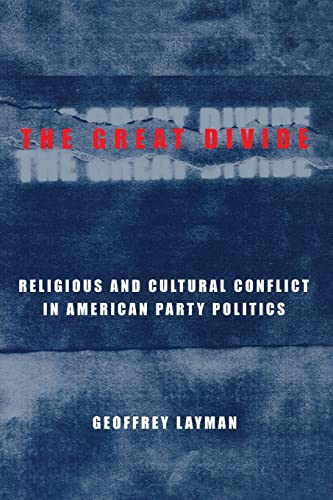

The Great Divide
Couldn't load pickup availability
About this book
How did the Christian Right come to predominate in the Republican Party? Why on the other hand do secular and religiously liberal beliefs largely prevail in the Democratic Party? Our understanding of the rift between the Democratic and Republican partiesa rift in many ways fueled by religious beliefsrequires an analysis of the entire spectrum of religious and nonreligious players in the American political process and how their influence has evolved over a long period of time. Employing a sizeable collection of data on party members activists and elites Geoffrey Layman examines the role of religion in the Democratic and Republican parties and the ways in which religion has influenced the political process from the early 1960s through the late 1990s. Using a wide variety of sources including the American National Election Studiesthe major academic survey of the American electorateLayman reveals a vast and subtly differentiated landscape of political life and a more vivid basis upon which to analyze the ever-widening chasm between the parties. Layman investigates a broad spectrum of religious variety citing differences between African American Protestants white evangelical Protestants Roman Catholics Jews nonreligious or seculars and smaller religious groups as well as political cleavages within these faith traditions. With his broad-based and thorough analysis he counters the often narrow focus and incendiary rhetoric of many of the "culture war" debates.