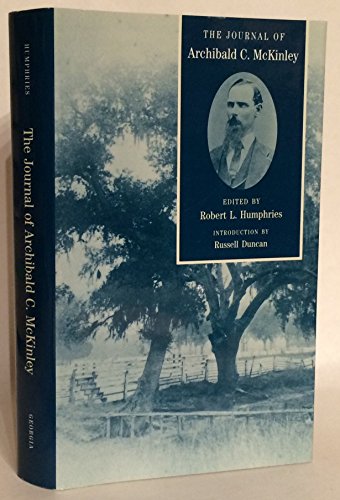
The Journal of Archibald C. McKinley
Couldn't load pickup availability
About this book
A valuable document from the Reconstruction era The Journal of Archibald C. McKinley offers the modern reader a rare glimpse of daily life on Sapelo Island Georgia as seen through the eyes of an upper-class farmer. A descendant of Scottish settlers Archibald McKinley was born in Lexington Georgia in 1842 and served as a Confederate officer during the Civil War. Just after the war he began farming near Milledgeville Georgia and within a year had met and married Sarah Spalding a granddaughter of Thomas Spalding who had built his plantation empire on Sapelo Island. In 1869 the McKinleys moved to Sapelo to raise cotton sugar cane and other crops. The bulk of this journal is a sustained account of their sojourn on the island through 1876 before their return to Milledgeville. The brief matter-of-fact entries that make up McKinleys journal focus mainly on the small occurrences that filled his days: farm work hunting and fishing expeditions sailing excursions church services changes in the weather the disposition of his crops the development of the Darien timber shipping trade. Scattered throughout however are intriguing references to dramatic events--shootings trials tensions between whites and the recently freed blacks--and to the processes of Reconstruction as when McKinley notes that "a company of Yankee soldiers" had arrived at the penitentiary to ensure equal treatment of black and white convicts. The longest entry in the journal is a eulogy for a freedman named Scott who as McKinleys slave had remained "true as steel" during McKinleys service in the Civil War. Editor Robert L. Humphries has included with the journal several of the McKinley family letters written after Archibald and Sarah left Sapelo Island. In the introduction historian Russell Duncan places the story in context focusing on the larger events of Reconstruction as they pertained to Sapelo Island and to the relations between blacks and whites there.