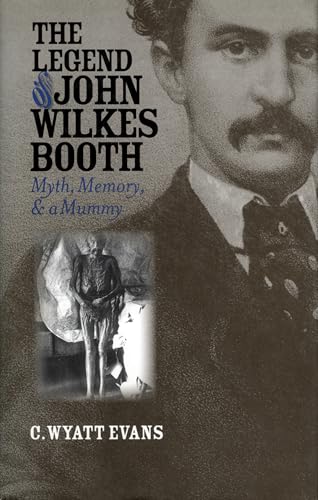
The Legend of John Wilkes Booth: Myth Memory and a Mummy (CultureAmerica)
Couldn't load pickup availability
About this book
A deformed thumb a neck scar from a stage accident and a broken left leg the result of a dramatic leap. These were the telltale markings that for decades identified a sideshow attraction as the supposed body of John Wilkes Booth. They persuaded onlookers that Lincolns assassin was not killed in 1865 but survived the assault on Garretts barn to live on as a fugitive for thirty years afterwards. As Wyatt Evans shows some popular stories no matter how weird and improbable simply refuse to die. Evans recounts how a mummified corpse came to embody the romantic image of the assassin and the legend of his survival. He traces the legends development in the weeks following the assassination to the appearance of the "Booth Mummy " the remains of an Oklahoma drifter embalmed in 1903 and displayed in carnival sideshows throughout the West. He assesses the political and ideological motivations in both Southern and Northern cultures that made proliferation of the legend possible as well as profitable. He concludes by examining the legends persistence in present-day America the mummys ironic fate and the recent efforts to exhume Booths real remains. Weaving a "vernacular intellectual history " Evans shows how the legend emerged from a tangle of cultural and historical events including white Americans quest for a suitable racial pre-history collective memories of the Civil War and even incipient suspicions of conspiracy since belief in Booths escape automatically implied a government cover-up of Booths capture and death. More than a sop to Confederate diehards for whom Booths escape symbolized Southern vindication the legend exemplified Americans inability and unwillingness to enact closure over the tragedy of Lincolns death. The Legend of John Wilkes Booth is a compelling story of how collective memories and popular histories collide with clash and sometimes overcome mainstream accounts of the past. It offers an alternate venue for studying the workings of Civil War memory in American culture and demonstrates how (and why) culture produced at the grassroots level can challenge the official version of events. Through his meticulous account Evans sheds new light on our complex attitudes toward heroes and villains our need to mythologize tragedies and our unwillingness to let go of myths however absurd.