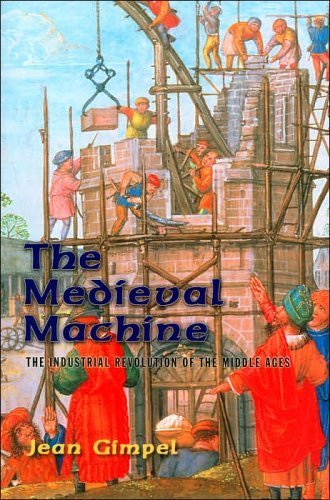

The Medieval Machine: The Industrial Revolution of the Middle Ages
Couldn't load pickup availability
About this book
The Medieval Machine: The Industrial Revolution of the Middle Ages by Jean Gimpel. paperback edition. ISBN: 9780760735824.
The Medieval Machine: The Industrial Revolution of the Middle AgesANNOTATIONThe industrial structure of the medieval world serves as a foundation for the coming Renaissance in this technological and historical study.SYNOPSISThe common, simplistic view of the Middle Ages as religion-centered and materially backward is challenged by Jean Gimpel in this milestone study, originally published in 1976. The Medieval Machine tells how, between the years 900 and 1300, Europeans created their first industrial revolution, which set Western civilization on the road to global dominance. Gimpel describes the main features of this early machine age: the pervasive use of waterpower (the oil of the medieval era); the agricultural innovations that energized the population through better nourishment; the spread of mining along with mechanized iron mills; and the appearance of modern industrial problems such as labor unrest and pollution. This is a story of technology triumphant: architect-engineers were adulated; there were tallest-building contests like those of thetwentieth century. The climax comes with the invention of the key modern device-the mechanical clock. The subsequent technological decline, Gimpel explains, was due to plague, famine, and a reversion to mysticism.In the epilogue, Gimpel asserts that the West in his time faced another technological decline; he did not foresee the digital boom of the 1980s and 90s and the development of a post-industrial economies. Nevertheless, his predictions may provide valuable material for historians of the recent past.