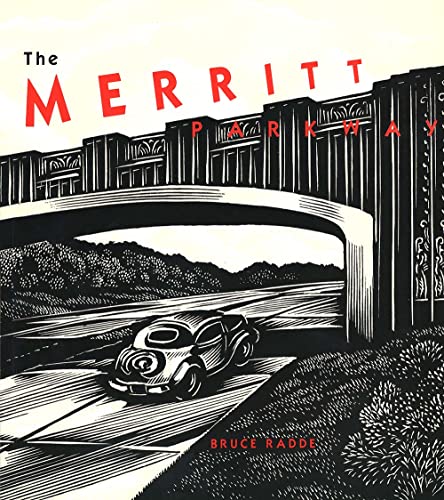
The Merritt Parkway
Couldn't load pickup availability
About this book
"One can build a concrete highway anywhere. . . . But the Merritt parkway is different. More than any futurama at the Worlds Fair . . . it shows what the highway of the future really should look likea highway where the eye is filled with beauty and the mind with peace."Bridgeport Post 1938 The Merritt Parkway which connects Connecticuts Fairfield County with New York State was built in the 1930s one of the earliest attempts to cope with Americas new obsession with the automobile. This book traces the history of the Merritt Parkway from the proposals for its construction and design in the early 1920s to its triumphant completion in 1940. Filled with vintage and recent photographs historic documents and maps it is not only a picturesque tour of a renowned Connecticut landmark but is also an appraisal of a major contribution to the built environmentone recently placed on the National Register of Historic Places. In word and image Bruce Radde explores what is special about this parkwayfrom the sensitive routing that hugs the rolling rural landscape to its sixty-eight masterful bridges designed by a single architect mainly in the Art Deco style making this the largest Art Deco design in the world. Radde also provides fascinating details about the scandal-filled process by which land was acquired the peoplepoliticians planners engineers and landscape architectsinvolved in the construction of the road the introduction of tolls and gas stations the decision to ban commercial vehicles and the reasons why the adjoining Wilbur Cross Parkway is not as inspiring as the older Merritt road. Radde discusses the various preservation efforts that have taken place since World War II. Comparing the Merritt to other acclaimed roads around the country such as the Pennsylvania Turnpike and the Blue Ridge Parkway he argues that the Merritt Parkway is a paradigm of what a superhighway can be a national treasure to be enjoyed cherished and protected.