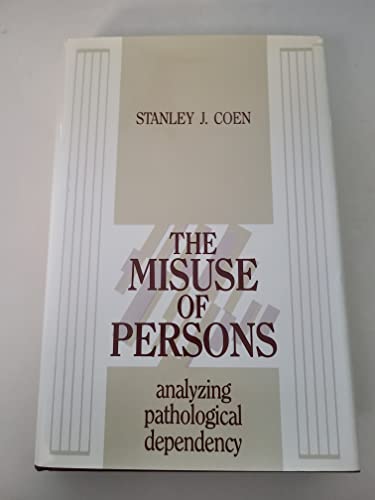
The Misuse of Persons: Analyzing Pathological Dependency
Couldn't load pickup availability
About this book
The Misuse of Persons: Analyzing Pathological Dependency by Coen, Stanley J.. hardcover edition. ISBN: 9780881631395.
In this major contribution to contemporary psychoanalysis, Stanley Coen illuminates a heretofore undescribed character structure especially resistant to analytic process. Pathologically dependent patients, for Coen, are identified not by surface character traits, but by their response to the intrapsychic demands of analysis. Such patients remain in treatment, sometimes contentedly, sometimes amid rebukes and complaints, but they do not profit from it. Their inability to use insight, especially in the transference, is matched by a proclivity for sadomasochistic enmeshment. In analysis, this tendency translates into a continuing dependent attachment to the analyst. In exploring the genetic roots of pathological dependency, Coen ranges beyond extant trauma theories in describing a pattern of parent-child interaction in which repetitive behavioral enactments substitute for the acceptance and resolution of conflicts, both intrapsychic and interpersonal. In analysis, pathologically dependent patients use the analyst as they have come to use significant others throughout their lives: as part of a defensive structure characterized by repetitive enactments and a refusal to face what is wrong with them. This "misuse of others" is infused with destructiveness, hostility, and rage, and the analyst necessarily becomes the object of these powerful emotions. With such patients, then, the road to therapeutic progress invariably passes through the analysis of mutual transferential and countertransferential hate, the patients tempting invitations to collusion and avoidance notwithstanding.