
The Mobilized American West, 1940–2000 (History of the American West)
Couldn't load pickup availability
About this book
The Mobilized American West, 1940–2000 (History of the American West) by Findlay, John M.. hardcover edition. ISBN: 9781496234773.
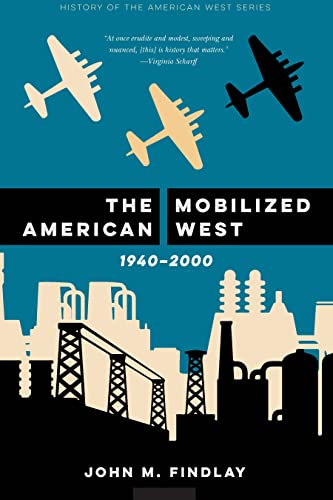
In the years between 1940 and 2000, the American Far West went from being a relative backwater of the United States to a considerably more developed, modern, and prosperous region—one capable of influencing not just the nation but the world. By the dawn of the twenty-first century, the population of the West had multiplied more than four times since 1940, and western states had transitioned from rural to urban, becoming the most urbanized section of the country. Massive investment, both private and public, in the western economy had produced regional prosperity, and the tourism industry had undergone massive expansion, altering the ways Americans identified with the West. In The Mobilized American West, 1940–2000, John M. Findlay presents a historical overview of the American West in its decades of modern development. During the years of U.S. mobilization for World War II and the Cold War, the West remained a significant, distinct region even as its development accelerated rapidly and, in many ways, it became better integrated into the rest of the country. By examining events and trends that occurred in the West, Findlay argues that a distinctive, region-wide political culture developed in the western states from a commitment to direct democracy, the role played by the federal government in owning and managing such a large amount of land, and the way different groups of westerners identified with and defined the region. While illustrating western distinctiveness, Findlay also aims to show how, in its sustaining mobilization for war, the region became tethered to the entire nation more than ever before, but on its own terms. Findlay presents an innovative approach to viewing the American West as a region distinctive of the United States, one that occasionally stood ahead of, at odds with, and even in defiance of the nation.