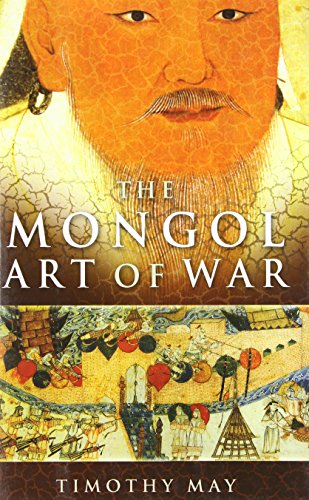
The Mongol Art of War: Chinggis Khan and the Mongol military system
Couldn't load pickup availability
About this book
The Mongol Art of War: Chinggis Khan and the Mongol military system by Timothy May. hardcover edition. ISBN: 9781594160462.
"An authoritative study of one of historys most feared and successful armies. . . . May concludes this definitive study by tracing the Mongol legacy to modern mechanized warfare."—Publishers Weekly "They razed cities to the ground, burnt woods, pulled down castles, tore up the vine trees, destroyed gardens, and massacred the citizens and husbandmen; if by chance they did spare any who begged their lives, they compelled them, as slaves of the lowest condition, to fight in front of them against their own kindred." —Matthew Paris recounting the devastation of Poland and Hungary in 1240 During the thirteenth century, Mongol armies under Chinggis Khan and his successors established the largest contiguous land empire in history, stretching across Asia and into eastern Europe. Contemporary descriptions of their conquests have led to a popular misconception that the Mongols were an undisciplined horde of terrifying horsemen who swept over opponents by sheer force of numbers. The Mongol army actually used highly trained regiments led by brilliant tacticians, such as Subutai, that carried out planned and practiced maneuvers. It was the strength, quality, and versatility of the Mongol military organization, not unchecked ferocity, that made them the pre-eminent warriors of their time. In The Mongol Art of War, historian Timothy May overturns myths and misunderstandings that distort our understanding of Mongol warfare, and demonstrates that the armies of Chinggis Khan had more in common with modern ones than with the armies of ancient Rome and those of the medieval kingdoms they confronted. Describing the make-up of the Mongol army from its inception to the demise of the Mongol Empire, the author examines the recruitment, weaponry, and training of the Mongol warrior. He also analyzes the organization, tactics, and strategies the Mongols used, how they adapted to fighting in different conditions and terrain—such as using harsh winter weather to their advantage—and overcame a variety of opponents by steadily changing and adopting new tactics and modes of combat.